Top 5 call tracking metrics every marketer should be measuring

Written by Natalia Selby

- 1. Calls by source: The ultimate attribution metric
- 2. Outcome of call: Beyond just a connection
- 3. Keyword performance: Refining your search strategy
- 4. Effective vs ineffective calls: Making every call count
- 5. Revenue or value from call: Showing the real return
- What other call metrics are increasing in importance?
- The bigger picture
Our 2025 State of call tracking report uncovers the metrics that matter most. From attribution to conversion, these are the benchmarks guiding marketers as they balance tighter budgets with ambitious growth goals.
“As marketers, we’ve all felt the pressure: tighter budgets, longer customer journeys, and the constant need to prove which campaigns are actually working,” explains Faye Thomassen, Mediahawk’s Head of Marketing. “With so many touchpoints to measure, connecting the dots between digital activity and real conversations is no small task.
“That’s where call tracking steps in, giving us the visibility we need into what’s really driving enquiries and revenue.”
In our State of call tracking 2025 report, we asked marketers a simple but telling question: “What are your top five call tracking metrics?”
The answers reveal not only what data teams are prioritising today but also where the phone channel is heading in 2025 and beyond. Let’s take a closer look at the top metrics highlighted in the report and why they matter so much.
1. Calls by source: The ultimate attribution metric
Topping the list, nearly three-quarters (74%) of marketers said calls by source is their most important metric.
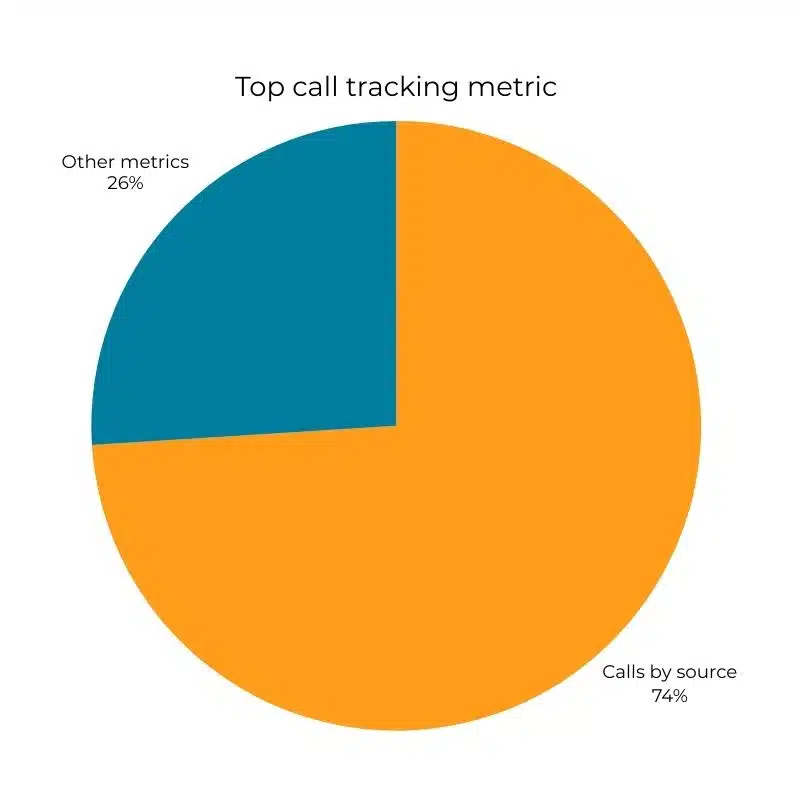 It’s the cornerstone of call tracking, showing exactly which campaigns, ads, or channels are prompting people to pick up the phone.
Why it matters
When you know where every call comes from, you can finally answer the question: “Which part of my marketing is actually working?” With 79% of respondents saying that 100% marketing attribution is one of their biggest challenges – and budgets under the microscope – this insight helps eliminate wasted spend and focus on the campaigns that really deliver.
2. Outcome of call: Beyond just a connection
In second place, 52% of marketers said outcome of call is one of their top metrics. It goes further than just counting calls, revealing what actually happened once the customer was on the line.
Why it matters
Was it a new lead, a sale, a service query, or even a recruitment enquiry? Understanding the outcome puts calls into context, so marketers can link campaigns directly to business goals. With lead generation (87%) and revenue growth (83%) ranked as top objectives, knowing the quality of calls is just as important as knowing the volume.
3. Keyword performance: Refining your search strategy
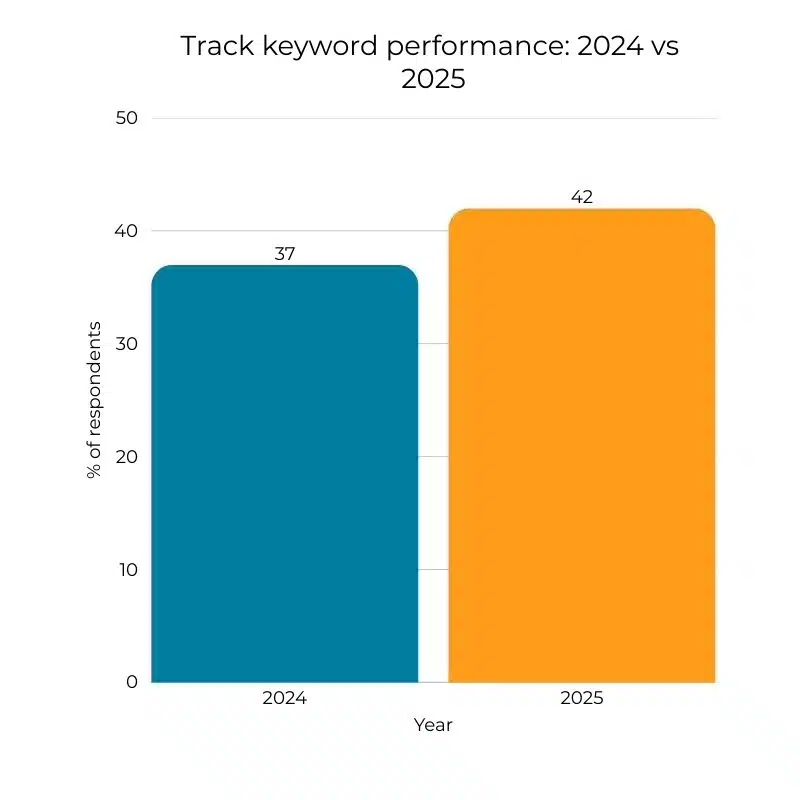 In third place, 42% of marketers put keyword performance at the top of their list. This metric is especially important for those investing heavily in paid search and SEO.
Why it matters
It shows which keywords lead to valuable calls – not just clicks. By spotting the search terms that bring in high-intent prospects, marketers can refine bids, adjust content, and prove the true value of their search spend. For teams under pressure to demonstrate ROI, this is a vital lever to maximise marketing efficiency.
4. Effective vs ineffective calls: Making every call count
In fourth place, 37% of marketers said they track effective versus ineffective calls. It’s a simple but powerful measure: effective calls are those that connect, while ineffective calls are those that go unanswered.
Why it matters
Every missed call is a missed opportunity – whether that’s a lost lead, an unhappy customer, or wasted marketing spend. By monitoring effective vs ineffective calls, marketers can see how much of their hard-earned traffic actually results in conversations. This insight not only highlights operational issues (like staffing or opening hours) but also helps prove the value of marketing by showing how many genuine enquiries are being captured. In short, it ensures you’re not just driving enquiries, but actually turning them into business.
State of call tracking 2025

5. Revenue or value from call: Showing the real return
Coming in fifth, 30% of marketers said they focus on the revenue – or the value – from calls. It’s a step beyond simply counting enquiries or tracking call volumes. By putting a number on the business generated, this metric gives a truer picture of marketing impact.
Why it matters
Getting a lead is good – but knowing how much money that lead actually brings in is even better. This metric shows the real value of the calls your marketing generates, connecting activity directly to revenue. For marketers under pressure to prove ROI and defend budgets, it’s a clear way to show which campaigns are truly paying off and where to invest next.
What other call metrics are increasing in importance?
While the top five metrics tell us what marketers are prioritising today, two others are quietly climbing the ranks – and they’re well worth paying attention to.
1. Cost of call: Budget pressure in sharp focus
Cost of call saw the biggest year-on-year increase of all metrics, with a 45% boost. That surge is a clear signal: teams are doubling down on cost efficiency and ROI. As budgets face greater scrutiny, understanding exactly how much each inbound call costs – and how that cost compares to the value it generates – is becoming essential for smart investment decisions.
2. Visitor to call ratio: Shining a light on intent
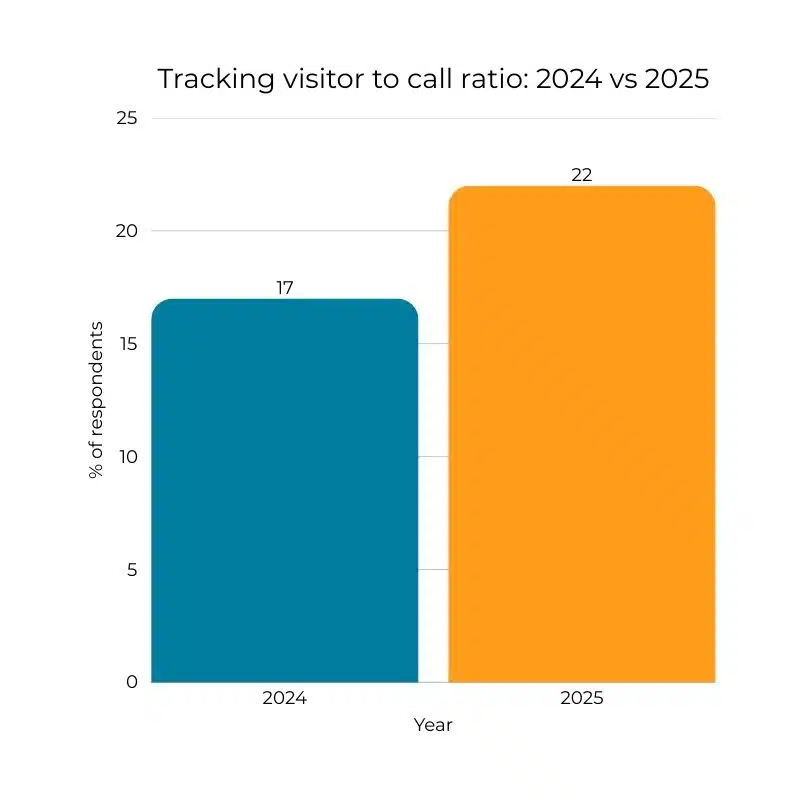 The visitor to call ratio (VCR) has risen by 31% since last year, showing growing recognition of its value. At its core, VCR measures how many website visitors go on to pick up the phone – a direct indicator of intent.
Why it matters
Most marketers are already tracking website traffic and call volumes separately, but VCR bridges the two to reveal how effectively digital activity is driving genuine conversations. A high ratio signals that your website, campaigns, or content are compelling enough to turn interest into action. And while a channel might only deliver a small slice of leads overall, if the majority of those visitors end up calling (and converting), that channel could be more valuable than it first appears.
“In short, VCR adds an extra layer of insight that goes beyond volume,” says Faye. “It helps marketers pinpoint where high-intent leads are coming from – and ensures effort is spent on the touchpoints that truly nudge prospects to make contact.”
Looking ahead: The role of AI in call tracking
The future of call tracking isn’t just about measurement – it’s about intelligence. The marketers we surveyed highlighted a growing appetite for AI-driven features like automation, predictive analytics, and personalised insights.
The right tool won’t just track calls, it will help uncover opportunities and make smarter decisions faster.
The bigger picture
“These metrics aren’t just numbers on a dashboard,” adds Faye. “They’re the evidence marketers need to prove impact, justify budgets, and make smarter decisions. Whether it’s tracking the source of every call, measuring outcomes, or digging into rising metrics like cost of call and visitor-to-call ratio, the message is clear: the phone channel is playing a bigger role than ever in driving growth.
“What’s more, the year-on-year uplift in metrics like cost of call (+45%) and VCR (+31%) shows how quickly priorities are shifting. Marketers aren’t just looking at volume anymore – they’re zooming in on efficiency, intent, and revenue impact.”
As customer journeys continue to get longer and budgets tighter, call tracking and marketing analytics offers the kind of visibility that makes all the difference. By focusing on these metrics, you’ll not only know what’s working – you’ll have the confidence (and the proof) to invest in the areas that will drive real growth in 2025 and beyond.

Download the State of call tracking 2025 report to explore all these findings, and more, in detail.