Measuring patient acquisition cost with Conversion Tracking


In healthcare marketing, the ultimate goal isn’t clicks or impressions; it’s consultations that turn into paying patients. These are typically low-volume but high-value leads, which makes it even more critical to understand exactly where your conversions are coming from and how much it costs to acquire each new patient.
Whether you’re working with an agency or running campaigns in-house, having clear visibility over your marketing performance is non-negotiable. Without it, you’re effectively guessing. With it, you can make confident decisions about where to invest, what to scale, and what to cut.
Why conversion tracking is the foundation
If your objective is to generate consultations, then your tracking setup needs to reflect that, not just form fills, but actual qualified leads. That could include:
- Booked consultations (online or via phone tracking tools)
- High-intent form submissions
- Call tracking with duration or outcome filters
Too many businesses optimise for “cheap leads” rather than valuable outcomes, which often results in wasted budget. The priority should always be quality over quantity.
From conversions to patient acquisition cost (PAC)
Once you have reliable conversion tracking in place, calculating your patient acquisition cost becomes straightforward:
Patient Acquisition Cost (PAC) = Total Marketing Spend / Number of New Patients
The key is defining what counts as a “new patient.” Ideally, you connect your CRM or practice management system back to your marketing data, so you can track which leads actually converted into revenue.
This is where many fall short; they stop at leads, rather than closing the loop to actual patients.
Turning insight into action
Understanding your PAC allows you to move from reactive marketing to strategic growth. Here’s how to make it actionable:
- Identify your highest-performing channels. Look beyond volume and focus on which channels deliver patients at the lowest cost. It might surprise you, but often it’s not the channel generating the most leads
- Optimise for conversion quality. If paid campaigns are driving a lot of enquiries but few consultations, refine your targeting, messaging, or landing pages. Better qualification upfront reduces wasted follow-up and improves efficiency
- Scale what works, but carefully. Once you know your PAC and your average patient value, you can confidently increase spend. If acquiring a patient costs £200 and they’re worth £1,500, there’s clear room to scale
- Align marketing with operations. Marketing doesn’t operate in isolation. If your front desk team isn’t converting enquiries into consultations, your PAC will rise. Tracking should highlight where the drop-offs happen, online or offline
The bigger picture: forecasting growth
When you understand your acquisition cost, you unlock the ability to forecast:
- If your goal is 50 new patients per month
- And your PAC is £250
- You know you need roughly £12,500 in marketing investment
From there, it becomes a question of optimisation, not guesswork.
Final thought
For high-value, low-volume services, every lead matters. Conversion tracking isn’t just a reporting tool; it’s the foundation for profitable growth. When done properly, it gives you clarity, confidence, and control over your marketing ROI.
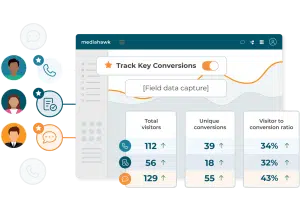
See how Mediahawk’s Conversion Tracking feature gives marketers this much needed clarity, complementing broader analytics tools for a detailed, big-picture view of customer behaviours, channel performance, and marketing success.