What should be in a care home marketing strategy? 11 proven tactics to fill beds faster

- 1. Build a strong PR presence
- 2. Leverage Google Ads (PPC)
- 3. Add live chat to your website
- 4. Use Facebook Ads to target local families
- 5. Optimise your website for conversion
- 6. Improve SEO and directory listings
- 7. Send regular email campaigns
- 8. Engage in community networking
- 9. Try leaflet drops
- 10. Host memorable events
- 11. Explore traditional advertising
- Conclusion
Guest post by Adam James, Director at Springup PR
If you want to increase self-funding enquiries and fill beds faster, you’ll need more than just a few ads and an open day. A structured marketing and PR plan, backed by your senior care and operations team, will put you ahead of other homes in your area – and make sure families notice you when it really matters.
With competition intensifying across the sector, a joined-up marketing strategy is vital. Here are 11 essentials every care home should consider:
1. Build a strong PR presence
A recent LinkedIn poll I conducted revealed that care homes overwhelmingly view positive PR as the most effective long-term strategy for generating enquiries.
By consistently sharing uplifting stories and achievements, care homes can amplify their reputation and connect with local communities. This includes securing coverage in regional newspapers, online platforms, radio, and TV, as well as leveraging digital PR tools like boosted Facebook posts to reach thousands within your catchment area.
Springup PR, for example, uses a unique ‘media insider method’ to help care homes secure regular and ongoing press coverage, with hit rates of coverage in target media of more than 90%.
Regional media outlets are particularly receptive to stories from care homes, given their role in supporting the elderly and expertise in dementia care – topics of high public interest. A proactive PR partner should be able to identify compelling stories, craft media pitches, and follow up persistently to ensure coverage.
Care homes with a robust PR strategy often hear from families who first discovered them through press features or local news segments.
2. Leverage Google Ads (PPC)
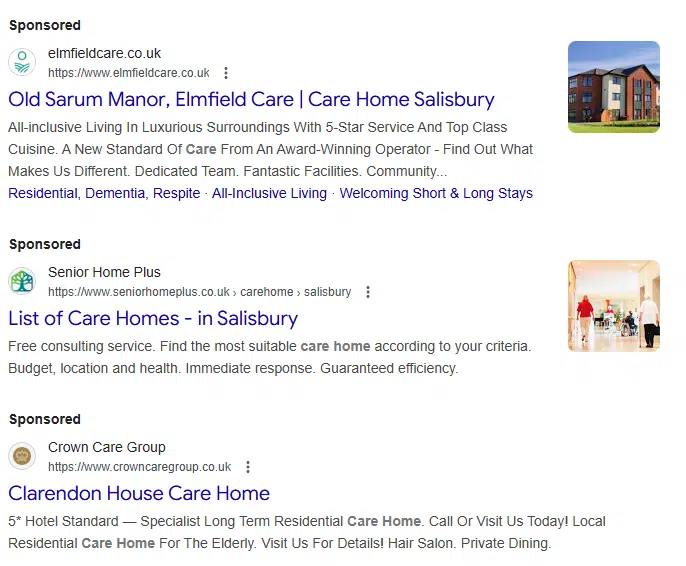 Google Pay-Per-Click (PPC) advertising remains one of the most powerful advertising channels for care homes. With 94% of families turning to Google during their search for care options (according to Lottie), PPC ensures your home appears prominently in search results.
Unlike organic SEO, PPC guarantees visibility for targeted keywords. When managed effectively, with ongoing optimisation and performance tracking, Google Ads can triple your enquiry volume and significantly boost occupancy.
Success hinges on running multiple campaigns, refining ad copy, and maintaining a dynamic list of negative keywords to avoid irrelevant clicks. Pairing PPC with call tracking lets you see exactly which keywords drive phone enquiries, so you can focus budget on the terms that deliver real leads.
Speech Analytics takes it further by automatically analysing those PPC-driven calls. You can quickly separate genuine care enquiries from other calls, spot recurring questions from families, and feed those insights back into campaigns and staff training. Broughton House used this approach to fine-tune their PPC strategy and saw a 300% increase in qualified enquiries.
You can also use the data from those keyword-driven calls to build remarketing audiences, allowing you to retarget families who have already shown interest with follow-up ads that keep your home front of mind.
In this video, I share 12 Google Ad metrics you need to know to increase enquiries
3. Add live chat to your website
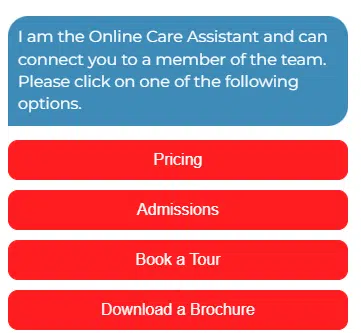 Once your website traffic increases through PPC, integrating a live chat feature can dramatically improve engagement. A hybrid model, combining automation and real-time human support, offers families a convenient way to connect.
Live chat allows your team to respond instantly to enquiries, or have a dedicated service handle messages using pre-approved scripts when your staff are unavailable. This tool, especially when paired with PPC, can lead to a noticeable rise in qualified leads.
4. Use Facebook Ads to target local families
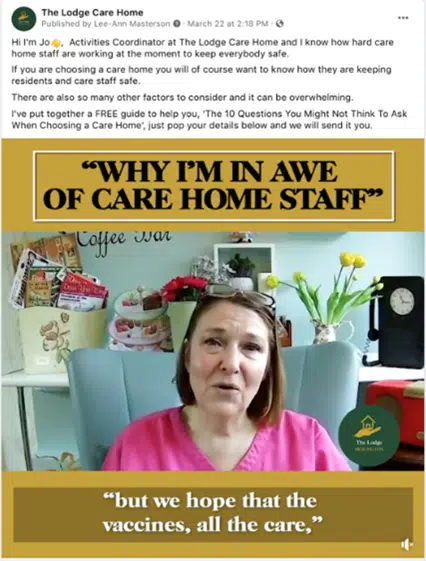 Facebook Ads offer precision targeting based on location, demographics, and interests. You can reach families within a specific radius of your care home and tailor your messaging accordingly.
Effective Facebook campaigns include compelling visuals, clear calls to action (e.g., brochure downloads), and lead capture forms. Regularly refreshing your ads helps optimise cost-per-click and cost-per-lead metrics.
Remember: Facebook generates leads, not direct enquiries. Prompt follow-up via phone, email, or text is essential to qualify interest and understand care needs.
Read more: Broughton House Facebook Ads success story
5. Optimise your website for conversion
Your website is often the first real impression a family has of your care home. To make it count:
- Keep branding and design fresh
- Showcase testimonials on every page to help convey trust
- Refresh your content regularly, and include blogs and news updates in your content strategy
- Use lead capture tactics, such as brochures or downloadable guide downloads (e.g. ‘Choosing the right care home’)
- Use engaging photos and videos of residents, families, and the care home team
- Have a live chat feature on your website that is manned by members of your team
- Use a dynamic phone number so you can track exactly which online campaigns and channels are generating calls.
6. Improve SEO and directory listings
Care home directories like carehome.co.uk, Lottie, and Autumna, dominate organic search rankings. Ensure your home is listed on these platforms and actively collect positive reviews.
Additional SEO tips:
- Maintain an up-to-date Google Business Profile with photos and contact details, including a unique phone number for each profile (if you have multiple properties)
- Encourage Google and carehome.co.uk reviews
- Publish news stories on platforms like bdaily.co.uk to appear in Google News
- Include location-based keywords in blog content (e.g., “care home in Banbury”)
7. Send regular email campaigns
Email campaigns (or ‘e-shots’) are a great way to share positive updates with prospective families and local influencers, such as journalists, healthcare professionals, and charity contacts.
Focus on storytelling rather than sales. Highlight resident achievements, community events, and testimonials. Email platforms like Mailchimp allow for personalised outreach and performance tracking.
8. Engage in community networking
Building relationships with local stakeholders is key. Connect with dementia and elderly care charities, GP practices, social workers, and other referrers. Hosting open days or collaborative events can strengthen these ties and increase visibility.
9. Try leaflet drops
Direct mail still works. Around 40% of care homes report receiving leads from leaflet campaigns. Use QR codes (don’t forget the UTM tags), unique trackable phone numbers, or dedicated email addresses, for each campaign to measure response rates and refine your approach.
10. Host memorable events
Open days are valuable, but unique events can attract wider attention. For example, hosting an antiques valuation with a well-known personality can draw hundreds of visitors and generate media interest.
Use targeted invitations and digital packs to promote the event and ensure strong attendance.
11. Explore traditional advertising
Magazine and radio ads can still deliver results – especially when negotiated strategically. They’re a good way to reach families who aren’t glued to social media or search. Pair these ads with a trackable phone number or unique landing page so you can see exactly which placements bring in enquiries. You can even combine this with Mediahawk’s call tracking to measure call volumes and understand which adverts spark the most interest.
Conclusion
A strong care home marketing strategy is about more than running a few ads. It’s a mix of digital, community, and traditional tactics, all measured so you know what actually drives enquiries. Whether it’s a PR story in the local paper, a Google Ads campaign, or a leaflet through someone’s door, the key is to track every call and click. That way you can invest where it counts and fill beds faster – without guesswork.

We know how complex marketing your care homes are, and that occupancy rates are a top priority. We use our detailed knowledge and experience of your sector to tailor our solution to meet your care groups’ needs.