Zero-click searches: Search that ends before it begins


How marketers can adapt to AI Overviews, lost clicks, and the new customer journey.
It used to be that ranking first in Google was the ultimate prize. Now? Ranking first doesn’t guarantee anyone will even land on your site. Almost 60% of searches now end without a click. People either get the answer straight from the search results, or they move on.
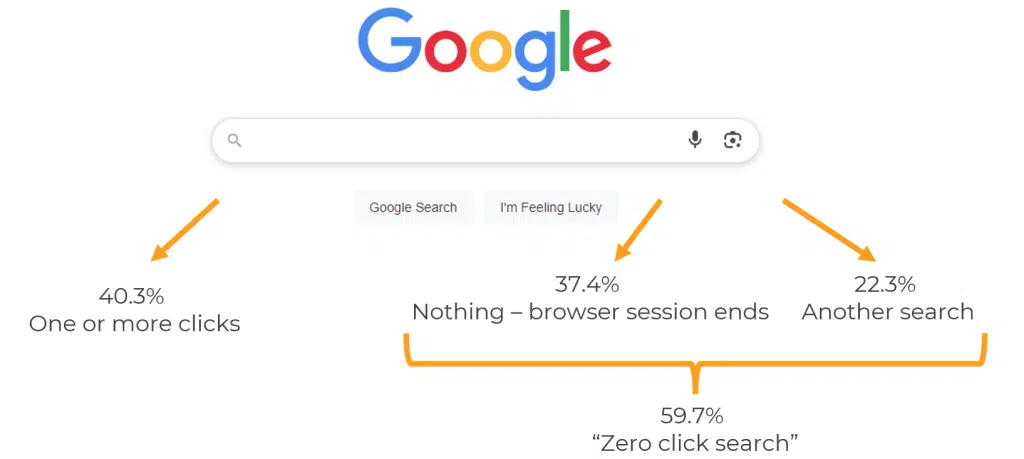
That shift is pulling billions of visits away from websites. One estimate suggests search sent around 9 billion fewer visits last year compared to the year before. For marketers, that’s not just a trend. It’s a fundamental change in how people discover and engage with brands online.
As Faye Thomassen, Head of Marketing at Mediahawk, puts it: “Marketers aren’t losing audiences – we’re losing their clicks. The challenge is proving our value higher up the journey.”
What are zero-click searches and where do they hit the journey?
A zero-click search is exactly what it sounds like: the search ends without a visit to a website. That can happen because:
- Google provides the answer directly in the search engine results page (SERP), for example, featured snippets, People Also Ask, local packs, or AI Overviews.
- The user ends their session or starts a new search without clicking anywhere.
The biggest driver right now is Google’s AI Overviews. According to Google, these summaries are already being used by more than 1.5 billion people a month. On mobile, they can take up three quarters of the screen, leaving little room for traditional blue links.
And the numbers tell the story. Ahrefs data shows the top organic result now gets 34% fewer clicks when an AI Overview appears. For non-branded keywords, click-through rates (CTR) can drop by 20%.
“Zero-click isn’t a side effect of AI – it’s the design,” explains Faye. “The whole point is to keep users on Google, not send them away. That’s where the customer journey is quietly being rewritten.”
Why brands still matter even when clicks vanish
If fewer people are clicking, does that mean fewer people are finding you? Not exactly.
Take HubSpot. For years their blog was a search juggernaut, driving over 24 million visits a month. But between 2023 and early 2025, that number collapsed to just over 6 million – a 75% drop. Analysts point to AI Overviews swallowing up the kind of informational queries HubSpot’s content relied on.
Yet HubSpot hasn’t disappeared. Research shows they’re still mentioned in 35% of AI answers for relevant queries. The brand remains visible, even if users don’t always click through to read their blog.
“It’s proof that you can be more visible than ever but still see traffic drop. Visibility without clicks is the new reality, and you need to measure it differently,” says Faye.
How marketers can adapt and lead the zero-click era
The rise of zero-click searches means traditional tactics alone won’t cut it. Marketers need to rethink where, how, and what they show to their audience. Success now comes from being visible before, during, and after the search – capturing attention, building trust, and measuring impact even when clicks don’t happen.
Here’s how to do it:
1. Show up where the journey starts
- Don’t just optimise for Google. Look at where your audience is spending time – TikTok, YouTube, answer engines, AI platforms – and make sure your brand is discoverable there.
- Prioritise high-intent content: transactional queries are less likely to trigger AI Overviews than broad informational ones.
“The opportunity isn’t just to fight for the old clicks. It’s to be part of the conversation, wherever it starts.”
– Faye Thomassen, Head of Marketing, Mediahawk
2. Make your content click-optional, not click-dependent
Structure your content so it works whether or not someone visits your site. That means:
- Clear, concise answers to specific questions.
- Schema markup (FAQ, HowTo, and voice-friendly tags so AI and voice assistants can easily use your content).
- Author profiles and credible sources that reinforce authority.
In other words, content that earns visibility even if it doesn’t earn a click.
3. Fix your measurement to catch hidden momentum
The customer journey doesn’t stop being measurable. It just stops being linear. Look beyond website visits to track:
- Impressions and mentions in AI Overviews or snippets.
- Growth in direct traffic (which is up 11% year-on-year in sectors like care and automotive).
- Off-site engagement – phone calls, branded searches, social referrals.
- Insights from Speech Analytics which reveal what customers ask, what signals intent, and how marketing is really driving enquiries.
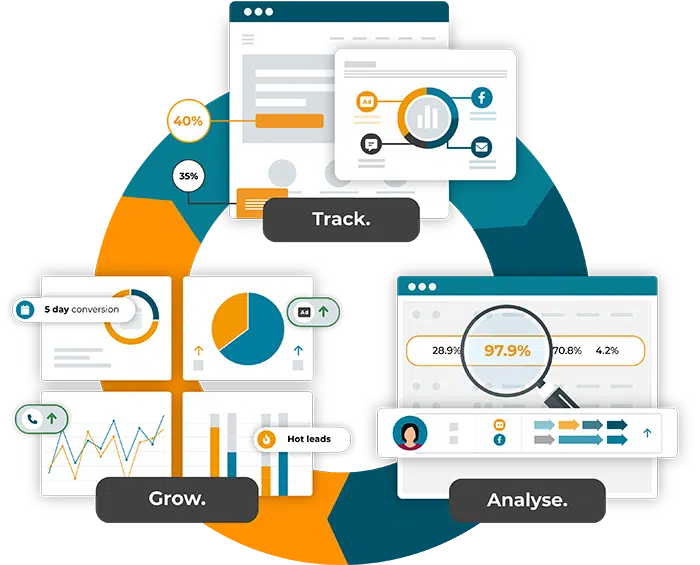
Tools like call tracking and in depth marketing analytics can help unify this picture, so you can still prove the impact of marketing in a world where clicks and standard attribution no longer tell the full story.
As Faye puts it: “The goal isn’t to own the click anymore. It’s to own the conversation. Clicks don’t tell you the full story anymore. Listening to what happens in conversations does.”
Conclusion: The click may be gone but your brand still counts
Zero-click searches aren’t a passing phase. They’re the new normal, driven by AI, convenience, and changing user behaviour. The marketers who thrive will be the ones who:
- Get seen in AI results and new platforms.
- Create content that delivers value whether it’s clicked or not.
- Measure visibility and outcomes in smarter ways.
The click used to be the finish line. Now, it’s just one possible step in a much bigger journey.

AI Overviews and snippets don’t have to mean lost visibility. Book a demo of Mediahawk to see how Speech Analytics and call tracking uncover the enquiries and revenue that happen beyond the click.