The rise of social search: Why your audience is skipping Google (and what to do about it)


Remember when ‘just Google it’ was the default advice for… well, everything? That’s changing.
In fact, Google and other traditional search engines have seen a dip – a 0.5% year-over-year decline, which translates to a whopping 9 billion fewer visits. That’s not a blip. It’s part of a broader shift that’s reshaping how people discover information online.
One of the biggest changes? The rise of social search.
What is social search?
Social search is exactly what it sounds like: people using social media platforms like TikTok, Instagram, YouTube, Reddit, and LinkedIn to find answers, recommendations, and products.
It’s not just a niche trend either. Forbes recently reported that one in four people are now using social media to search online. And for younger users, that number is even higher.
“These platforms are built to serve up trend-driven, highly relevant, user-generated content,” says Michael Morrell, CEO at Mediahawk. “People go there not just to browse, but to research products, watch how-to content, read reviews, and often make purchases without ever leaving the app. That’s huge.”
But here’s the curveball: while most social platforms technically allow external links, they often don’t make it easy for users to click them.
Think about it. Links usually open in in-app browsers and interrupt the user experience. Platforms like LinkedIn are even known to down-rank posts with external links, reducing reach to keep people from leaving the platform. So even when you can include a link, it’s not always worth it.
The result? People are increasingly discovering, researching, and engaging with your brand without ever visiting your website.
Which brings us to…
The rise of zero-click content
Social search is tightly connected to the boom in zero-click content – content that answers a question or provides value without needing you to click through to a website.
Rand Fishkin’s research shows that zero-click content can get 10 times the reach compared to traditional formats. And nearly 60% of all searches are now zero-click, meaning users either get what they need right away or continue searching without ever visiting a site.
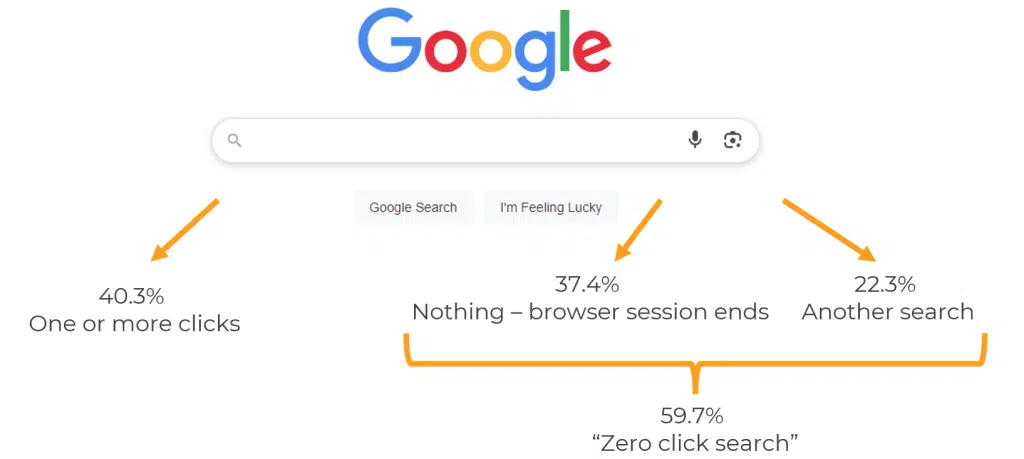
Graphic showing Rand Fishkin’s research on European Google searches.
Rand Fishkin’s research shows that zero-click content can get 10 times the reach compared to traditional formats. And nearly 60% of all searches are now zero-click, meaning users either get what they need right away or continue searching without ever visiting a site.
This poses a bit of a problem if you’re only measuring success through website visits. It also explains why your ‘direct’ traffic numbers might be going up.
It turns out a lot of the traffic coming from social search (and other zero-click sources) is being reported as ‘direct’. That’s especially true in sectors like automotive and care, where we’ve seen an 11% YoY rise in direct traffic. It’s ‘dark social’ – and in some cases, AI – that’s driving it.
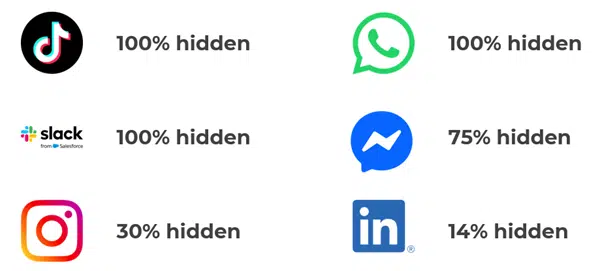
Graphic showing the percentage of referral traffic being hidden by TikTok, WhatsApp, Slack, Facebook Messenger, Instagram, and LinkedIn.
So what does this mean for marketers?
Why are people skipping Google?
It’s simple, really. Consumers want:
- Less effort and faster answers
- To stay in the platforms they already enjoy using
- More privacy and less tracking
- Fewer ads cluttering the experience
- More relevant, real-world content
“They’re searching where they feel comfortable and where the content feels native – not formal or keyword-stuffed,” Faye explains. “They want answers in a reel, a Reddit thread, or a TikTok tutorial, often from real people who’ve been there and done that. And increasingly, that’s exactly what they’re getting.”
“They’re searching where they feel comfortable and where the content feels native – not formal or keyword-stuffed. They want answers in a reel, a Reddit thread, or a TikTok tutorial, often from real people who’ve been there and done that. And increasingly, that’s exactly what they’re getting.”
– Michael Morrell, CEO, Mediahawk
What marketers can do about it
So how do we adjust?
Here are a few practical steps:
1. Shift your mindset
Stop focusing solely on Google traffic. Start thinking about what happens before Google – those early-stage discovery moments on social.
2. Understand your customer journey
Where is your audience hanging out? What type of content are they consuming? And crucially – where are they making decisions?
Be where it matters. Not just where it’s easy to measure.
3. Create content for discovery
Your goal on social isn’t always to drive a click. It’s to build brand familiarity, offer helpful content, and make sure your brand shows up in the right feeds at the right time. If they see you enough, they’ll come to you – even if it’s via a ‘direct’ visit.
4. Use your marketing analytics
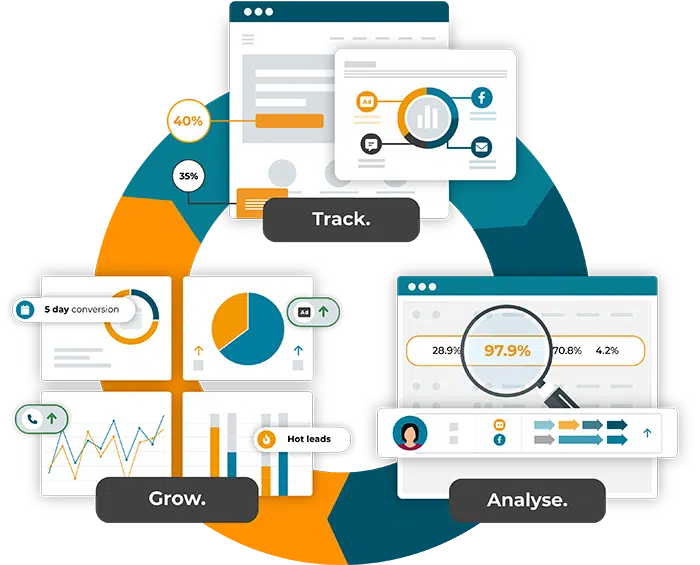 Start digging into your ‘direct’ traffic. Chances are, some of it is actually coming from social discovery.
Here’s how you can get smarter with your analytics:
- Work with your call handlers and use AI-powered Speech Analytics to understand what people mention during calls – especially if they reference something they saw on social.
- Track brand impressions off-site, even if there’s no click, with tools like Google’s Marketing Platform and tracking pixels.
- Use UTMs and call tracking to understand the user journey when visitors land on your site from referring sources.
- Create custom sources in your marketing analytics platform to categorise traffic that doesn’t come with a neat referrer tag.
- Use tools like Parameter Connect to bring together performance data from different datasets across both your online and offline marketing activity.
Accurate marketing attribution and Speech Analytics are your best friends here. They help uncover the story behind the traffic.
Embrace the new normal
This isn’t just a trend. It’s a shift in how people behave online.
“We’re in a new era of search: one where your audience is in control. They choose where they discover, what content they trust, and how they get answers. To keep up, you need better visibility into what’s really driving engagement,” says Michael. “That means doubling down on analytics, understanding the ‘why’ behind your direct traffic, and surfacing those hidden discovery paths. Because social search might not send a click – but it could still be your next lead.”

Discover how Mediahawk’s marketing analytics help you uncover hidden customer journeys.