5 high-value ways to implement an AI marketing strategy


With a third of marketers already exploring an AI marketing strategy in some capacity, the industry is starting to separate the hype from the practical, and identify which applications offer true value for busy marketing teams.
The trick to implementing AI effectively is to start with small, closely targeted projects that help you test what’s useful and impactful for your strategy. With a clear idea of what success looks like before you get started, you can make sure you’re matching the capabilities of your chosen AI tools to the tasks you’re trying to accelerate, automate, or simplify.
“You need to start with a really clear goal in mind for what you want to achieve,” says Faye Thomassen, Head of Marketing for Mediahawk. “If you’re led by the technology, you’re less likely to see a compelling ROI – whether that’s financial or operational.”
“You need to start with a really clear goal in mind for what you want to achieve. If you’re led by the technology, you’re less likely to see a compelling ROI – whether that’s financial or operational.”
– Faye Thomassen, Head of Marketing, Mediahawk
The good news is, there are plenty of compelling use cases for AI in marketing – for creative, analysis, and performance workflows. And many of them build naturally on the capabilities you’ll likely already use in your martech stack.
Today, we’re focusing on our top five examples across analysis and performance, which help busy marketers build a better understanding of who they’re targeting, how to reach them, and how to track those interactions.
1. Customer segmentation
There’s no such thing as too much insight into your ideal customer profile (ICP). But if you’re dealing with a lot of different channels, campaigns, audiences, or even a wide range of products, you can end up with more data than it’s feasible to work with manually.
By setting up your AI tool with your chosen parameters, such as demographics, purchase history, engagement habits, and channel preferences, you can quickly and easily segment your audience.
This not only speeds up the time-consuming analytics work, but frees up your team to apply their expertise in more valuable ways – like interpreting customer behaviour.
AI excels at spotting trends and connections that might go under the radar – so you might even be able to track new and unexpected characteristics of the audiences you reach.
2. Real-time personalisation
Recent research found that 81% of customers prefer companies that offer personalised experiences – but Deloitte also found that consumers recognise just 43% of their brand interactions as personalised. “We all know how important personalisation is,” adds Faye. “But building an interaction that feels relevant and timely – and achieving that at scale for each person – is very hard to do.”
It’s unlikely that you have the people power (or budget) to create a bespoke experience for everyone who visits your website or fills out a contact form. AI can help you personalise content on multiple levels, by offering different content recommendations based on your segmentation, adjusting your messaging to match your prospect’s priorities, or reconnecting with a wayward lead based on where they dropped off on their journey.
3. Lead scoring and prioritisation
 What makes a good lead? You know. Your colleagues in sales know. But it can be complex and time consuming to vet every interaction on your website or contact channels to see if they’re a viable prospect.
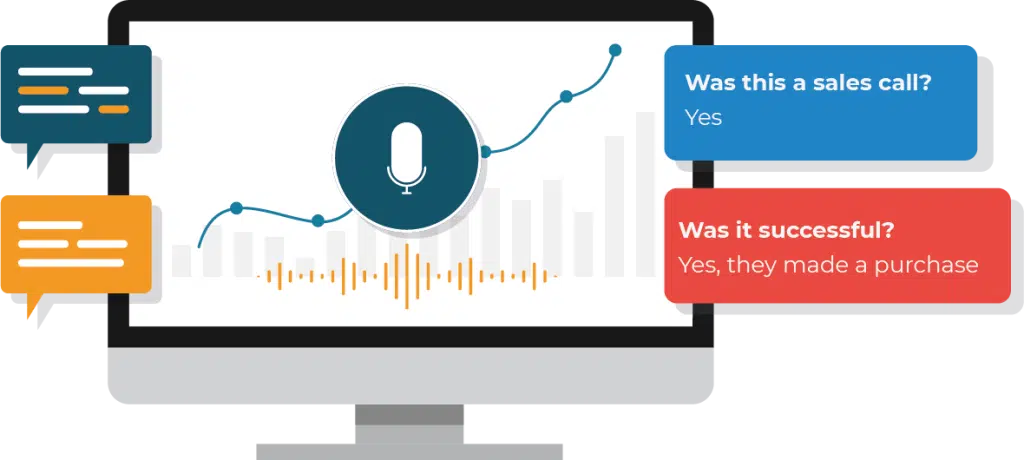
By training an AI tool on historical data about sales accepted leads (SAL) and successful conversions, you can automatically score and prioritise leads based on the behaviours that indicate they’re likely to convert.
With AI, you can even extract this insight from channels that are difficult to analyse, such as phone calls. Using conversational analytics, AI can answer questions like “was the caller ready to buy?”.
Sharing this knowledge with sales strengthens the link between your teams by ensuring you’re passing on the most promising leads for them to focus on.
4. Attribution modelling
 According to our annual research, nearly 70% of marketers struggle to achieve 100% attribution. When you couple that with the fact that almost half of senior marketers still find it difficult to prove the value of their work to leadership, it’s vital that your martech steps up to provide that clear link between your efforts and business revenue.
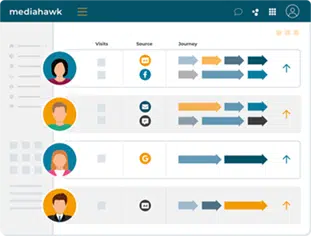
“Most customers will go on a complicated journey from awareness to conversion,” says Lawrence Cavill Grant, Mediahawk’s Head of Commercial. “They’ll arrive from different channels, interact with different content, and choose an engagement method that most suits them.
“AI can untangle that journey to demonstrate which channels, campaigns, or content were the most profitable, by charting a prospect’s progression through each touchpoint.”
5. Ad spend optimisation
 Experimentation is at the heart of finding the right mix of channels, keywords, ad formats, and content to capture your audience.
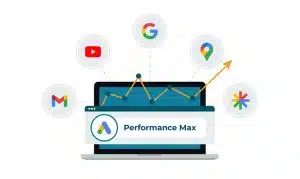
This cycle of monitoring performance and tweaking your approach is hugely valuable for allocating your ad budget wisely via tools like Google Ads Performance Max.
With AI, you don’t need to do this adjustment manually; it can automatically track your highest-performing channels and messaging, and use that data to optimise bids and reallocate spend in real time. And the more visibility you have of what a successful customer journey looks like, the more insight your AI tool can feed back into your strategy.
Summary
AI in marketing is no longer just a buzzword. It’s moving past the hype and proving useful for everyday marketing. The trick is to start small and focus on the jobs where it can save time or spot patterns you’d miss.
This blog shows how marketers are already doing that. From segmenting audiences in seconds to delivering personalised experiences in real time, AI is helping teams focus on strategy instead of spreadsheets. It can score and prioritise leads, work out which channels really drive sales, and keep your ad spend working hard.
The takeaway? AI isn’t one all-encompassing tool. It’s a set of handy features you can plug into what you already use. Pick a clear goal, test it on a small task, and build from there to get better insights and stronger results.

In AI for marketers: Turning a trend into a reality, we explore these use cases and more, charting AI’s potential impact throughout the marketing workflow – from planning and research to optimisation.
To explore those insights – including a practical roadmap for getting started with AI for marketing – get your copy of the guide now.