The results are in: State of call tracking 2026

Written by Faye Thomassen

- Call tracking is becoming more useful – and more important – than ever
- What are marketers’ top goals and challenges for 2026?
- Why do marketers use call tracking?
- What insights are marketers getting from call tracking?
- How cost-effective is call tracking software?
- What’s the future of call tracking?
- Next steps
Get the key insights from our annual UK Call Tracking Benchmark survey to see why marketers depend on call tracking, the value they get from it, and what the future holds.
Call tracking is becoming more useful – and more important – than ever
The UK Call Tracking Benchmark 2026 is the most recent edition of an annual, industry-wide survey conducted by Mediahawk. Each year, we survey marketers across the UK to understand their challenges and priorities, and how they’re using call tracking software to achieve their goals.
This year’s results show a mature call tracking market, with more marketers using its insights to inform tactical and strategic decisions. Call tracking adoption in our 2026 cohort is 74%, up from 64% last year.
Almost three-quarters (73%) of our respondents expect call volumes to rise in 2026. The phone remains a vital channel in the path to conversion, especially for considered decisions in the automotive and private care sectors.
Unsurprisingly, AI is a key theme in this year’s survey, with adoption rising rapidly as marketers seek ways to ease operational strain, optimise campaign performance, and eliminate wasted spend.
We’ll explore that – and several other trends the survey revealed – in more detail below. Let’s get into the results.
What are marketers’ top goals and challenges for 2026?
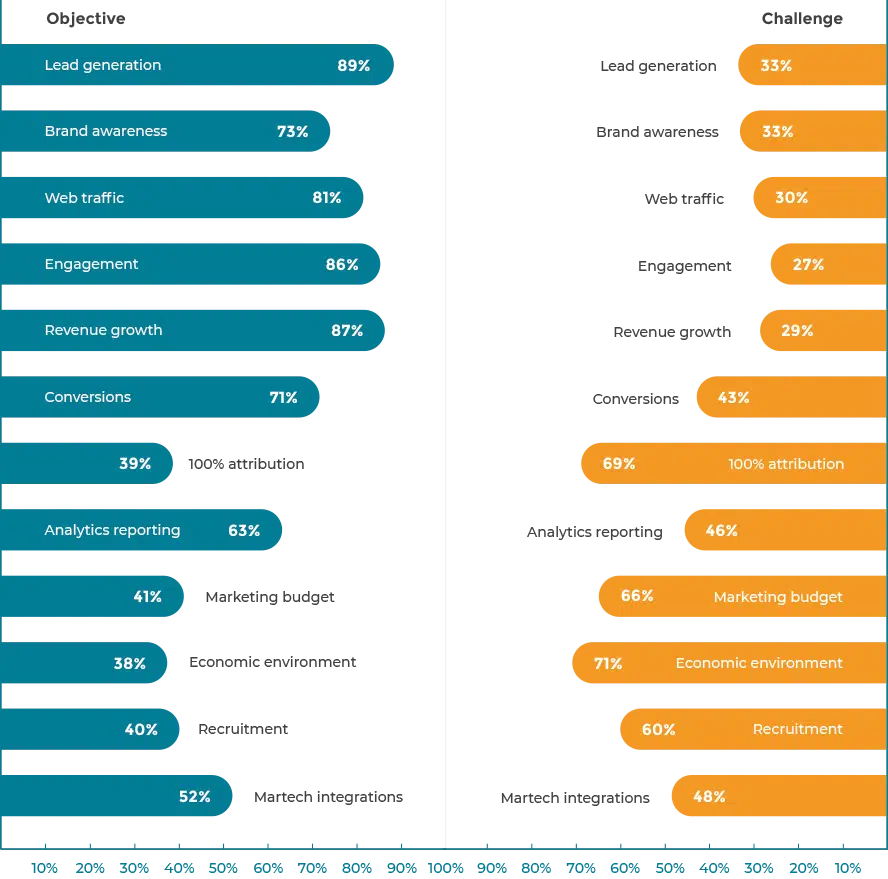
It’s no surprise to see lead generation, brand awareness, and conversions remain among marketers’ top objectives. All of them connect directly to another goal – revenue growth.
The most interesting development is how many marketers are focusing on engagement; 86% of respondents selected it as a goal this year, a substantial increase from last year’s 70%. To boost engagement, marketers must be able to quickly understand what’s working, so they can make tweaks or reallocate budget from underperforming campaigns and replicate successful activities.
What’s your biggest marketing objective and / or challenge in 2026? (Please select all that apply)
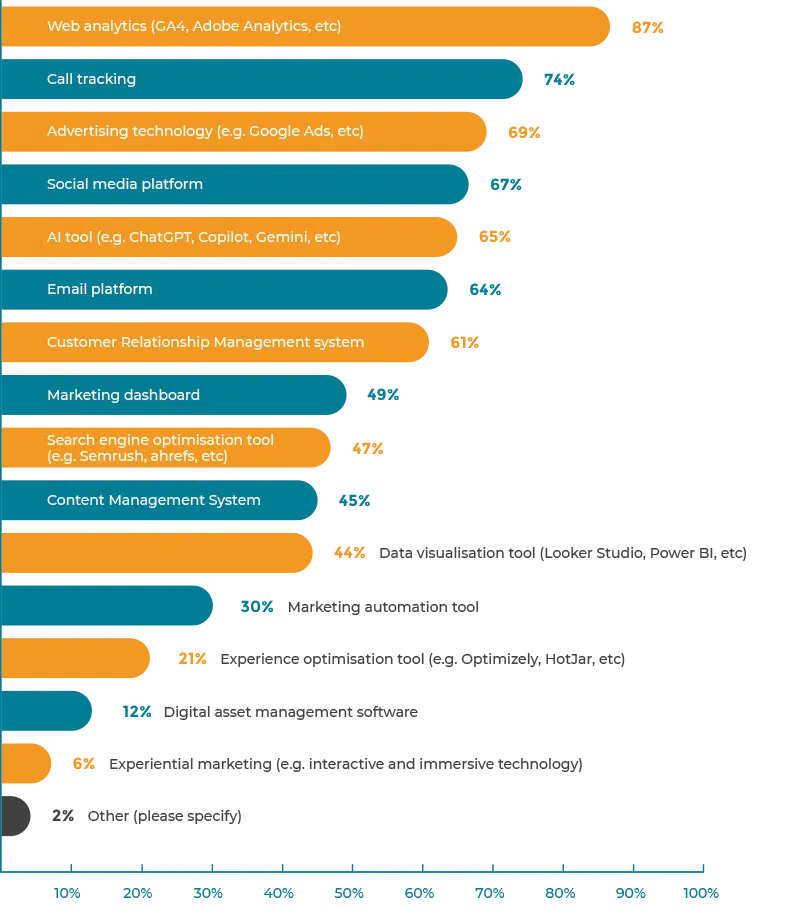
Marketers continue to rely on a wide array of technologies. While many of these are tried and tested, such as CRMs and advertising tech, there’s been a sharp increase in the use of AI tools, which is now at 65% compared to 51% last year and 38% in 2024. This rapid growth suggests marketers are finding it useful in many aspects of their workflows, from campaign planning to execution and optimisation.
The increase in call tracking usage – up 10 percentage points from last year at 74% – demonstrates that marketers are finding value in its capabilities. It’s now a very mature tech category, and advanced platforms such as Mediahawk already offer numerous AI-powered features that minimise marketers’ effort while maximising campaign and channel insight.
What does your marketing tech stack look like? (Please select all the tools you currently use)
Why do marketers use call tracking?
Understanding the effectiveness of channels and campaigns (81%), monitoring performance (58%) and improving conversion rates (42%) are still the most common reasons for using call tracking.
However, this year we’ve seen an increase in budget efficiency as a top-three reason for using call tracking, rising from 28% to 35%. This makes perfect sense, as call tracking is a key factor in achieving 100% marketing attribution, allowing marketers to focus their spend on channels, campaigns and keywords that genuinely move prospects towards conversion.
What are your top three reasons to use call tracking software? (Please select up to three that are most important)

For survey respondents who don’t currently use call tracking, budget (41%) and resource (37%) are still common barriers to adoption. This reflects a misconception that call tracking is an expensive option. It can provide exceptional value for money by helping marketers make the most of limited budgets.
This year, we’ve seen a significant increase in the proportion of marketers citing time as a blocker to adopting call tracking, up to 37% from 21% in 2025. Marketers are naturally wary of adding to their operational effort. But with the right solutions, they can actually reduce manual effort and save time.
For example, AI-driven Speech Analytics in Mediahawk analyses every customer call to give marketers insights into campaign performance, keyword gaps, and optimisation opportunities. That means they cut down on manual tasks while improving performance and avoiding wasted spend.
What are the main challenges stopping you from tracking calls? (Please select all that apply)

Respondents who do use call tracking still experience obstacles that make it harder to track calls. As in previous surveys, marketers see time (49%) and resource (46%) as key challenges. This suggests that call tracking users need to explore the full range of AI and automation features available on their platform, or investigate platforms that offer more capabilities for reducing manual effort.
However, there’s also been a notable reduction in the proportion of respondents citing technical knowledge as a challenge for tracking calls, down to 18% compared to 31% in 2025. This highlights the maturity of call tracking technology and shows that marketers are becoming increasingly familiar with how to use it effectively.
What are the main challenges for tracking calls? (Please select all that apply)

What insights are marketers getting from call tracking?
As we saw in our previous surveys, marketers are using call tracking to monitor a variety of metrics. Tracking calls by source and keyword performance helps marketers see which campaigns and channels are delivering high-intent leads. Meanwhile, monitoring call effectiveness (whether it was answered), category (sales, service, recruitment, etc.) and outcome allows marketers to get a full picture of the entire customer journey.
The call outcome metric saw the biggest year-on-year increase, up from 52% to 60%. This suggests more marketers are taking advantage of AI capabilities like Speech Analytics to understand why some calls are more successful than others.
What are your top five call tracking metrics? (Please select up to five that are most important)

In their efforts to achieve 100% marketing attribution, teams continue to use trackable numbers on a broad range of channels.
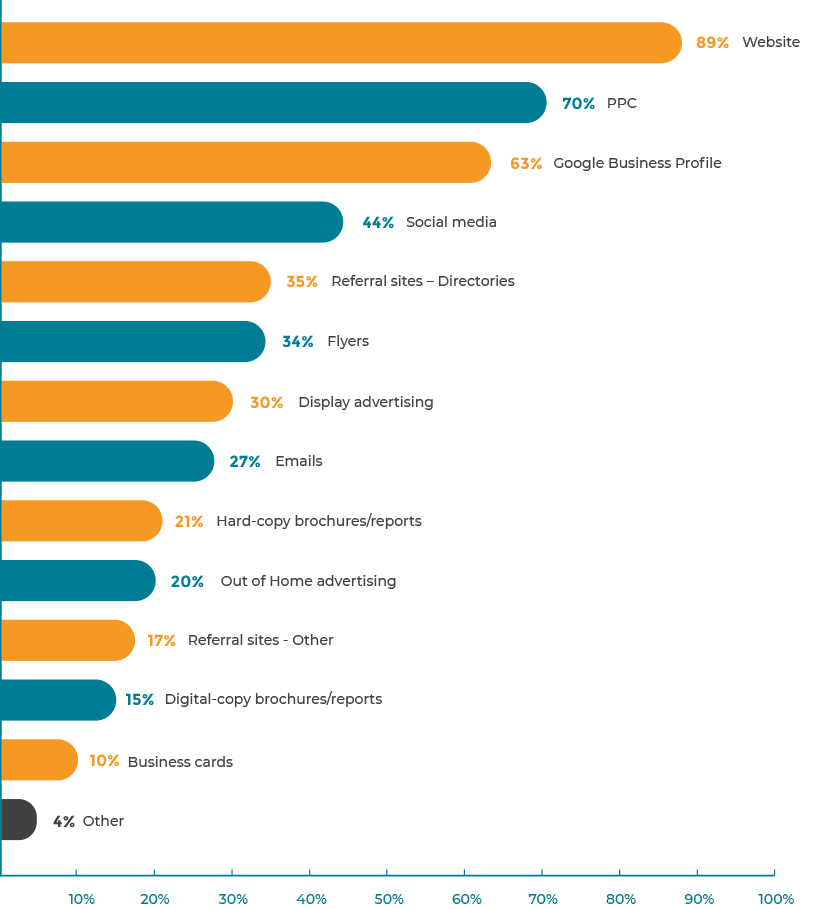
It’s good to see that, after last year’s slight fall, more marketers are now using trackable numbers on Google Business Profiles (63% compared to 51% in 2025). Without insights from important sources like this, teams will struggle to accurately assess the effectiveness of their marketing efforts.
What marketing collateral do you put trackable phone numbers on? (Please select all that apply)
Call tracking’s versatility means marketers are relying on the software more than ever to provide cross-channel insights for better-informed decisions. More than half (55%) of respondents say they’re using call tracking more for decision-making compared to last year.
Compared to last year, how much are you using call tracking to make decisions?

How cost-effective is call tracking software?
This year’s survey shows some minor upward movement in marketing budgets. While those spending under £250,000 a year on marketing accounted for 55% of respondents in 2025, that’s now down to 45%.
How much on average do you spend on marketing and advertising per annum?
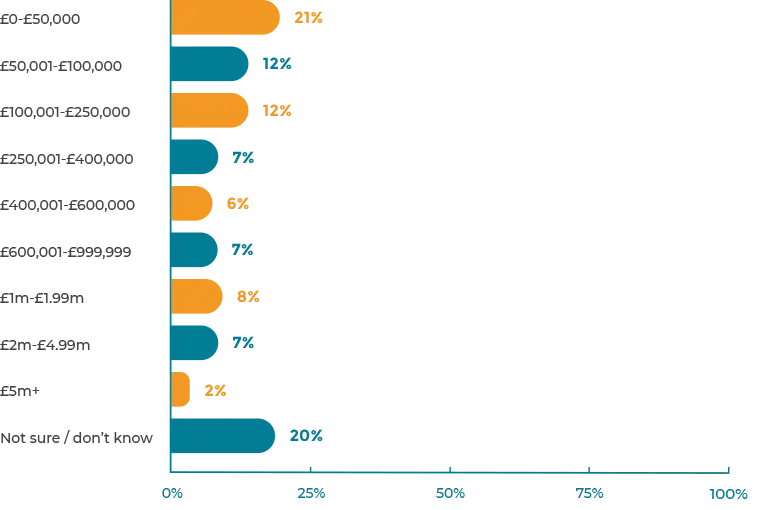
This shift could simply be due to inflation-related cost increases. However, it may be a sign that teams are beginning to realise more value from their martech tools and are increasing their investments as a result. Of this year’s respondents, only 23% spend under £10,000 a year on martech, compared to 39% of our 2025 cohort.
How much on average do you spend on marketing technology per annum?
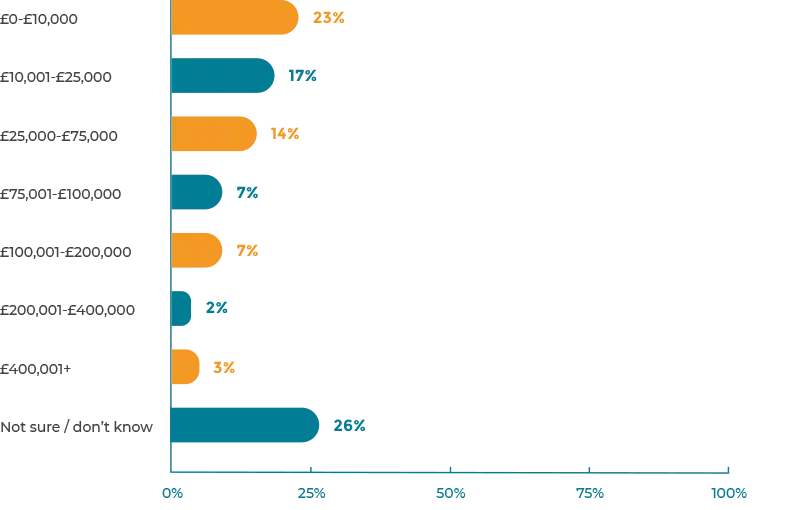
Call tracking continues to be a highly cost-effective part of the martech stack, with 81% of teams allocating less than 25% of their budget to it, a small increase on last year’s 76%. And marketers are clearly seeing meaningful value from these investments, with 36% planning to invest more in call tracking in the coming year.
As a percentage, how much of your marketing technology budget allocation is spent on call tracking?

Compared to last year, how much are you planning to invest in call tracking in the next 12 months?

What’s the future of call tracking?
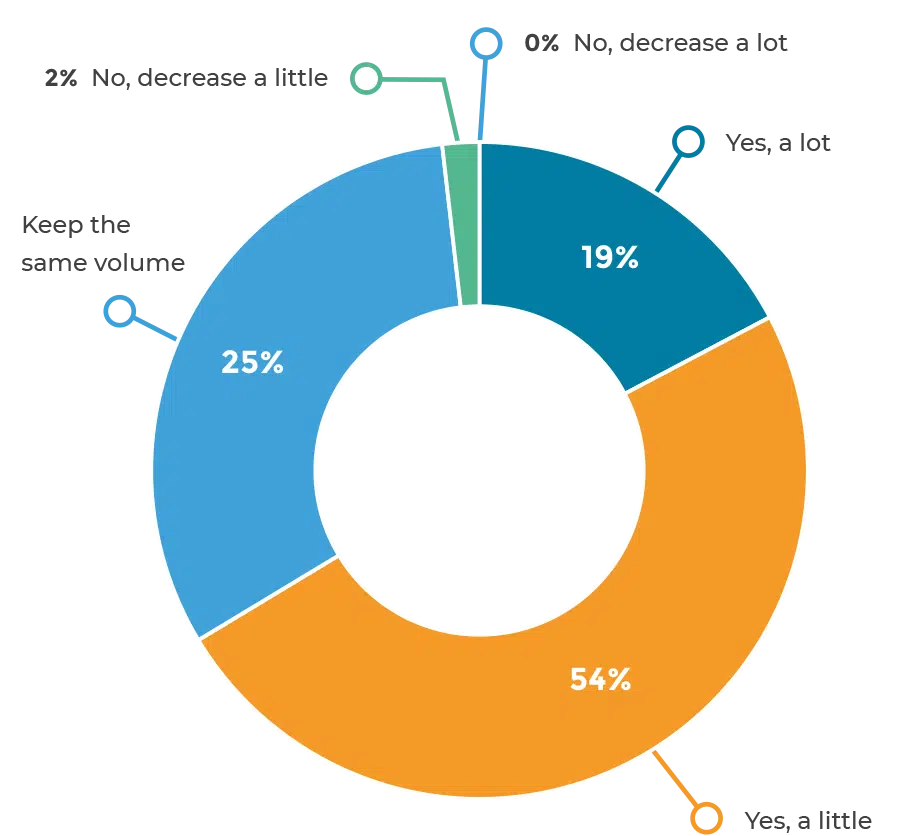
With 73% of our respondents expecting call volumes to increase this year, it’s no surprise that call tracking plays such a significant role in helping them monitor and improve campaigns and customer journeys.
Compared to last year, are you planning/expecting your call volumes to increase?
When we asked marketers about the future of call tracking, three key themes emerged:
1: AI will help marketers understand customer conversations
Alongside automated call transcription, summarisation, and tagging, respondents expect AI to provide insight into caller sentiment and intent.
Rather than just logging and tagging calls, marketers want to understand the quality of the caller’s experience, as well as the content and outcome of each conversation. Fortunately, as we’ve seen, tools like Speech Analytics in Mediahawk already offer these capabilities.
2: Call tracking will evolve to provide unified, end-to-end attribution
Several of this year’s respondents see a future where call tracking becomes part of a single enquiry-tracking layer covering every touchpoint on the customer journey.
This future is already within reach. For example, Conversion Tracking in Mediahawk provides this unified view of the customer by connecting data from form fills, calls, and chats, allowing marketers to attribute revenue to the campaigns and touchpoints that drive conversions.
3: Call tracking will help unite marketing and operations
Many respondents expect call tracking to move beyond measuring marketing effectiveness and inform operational improvements. Integrating call tracking data with CRMs, analytics platforms, and other operational systems will help teams optimise the customer experience and boost revenue generation.
Next steps
It’s exciting to see that our respondents predict a bright future for call tracking – and that many of the AI-driven capabilities they view as aspirational already exist.
If you’re looking for ways to get started – or to get even more business value from call tracking – book a demo to see how Mediahawk can help you achieve your goals.