Capture more enquiries with call tracking: A quick-start guide for car dealerships


- Why your phone data matters more than you think
- Step 1: Start with dynamic website tracking
- Step 2: Add static numbers to your off-website marketing channels
- Step 3: Connect the dots with Sales Matching
- Step 4: Use Speech Analytics to understand what’s actually being said
- Step 5: Act on the data (faster than you think)
- The real-world impact: What dealers are achieving
- Your quick-start guide
- Summary
Most automotive dealers know phone calls matter, but few can tell you which marketing efforts actually drive them – or what happens once someone rings. Here’s how to gain complete visibility over your phone channel without the typical implementation hassle, so you can start capturing more enquiries and stop wasting budget on channels that don’t convert.
Getting started with call tracking doesn’t mean months of setup and complex integrations. The reality is, you can start capturing actionable insights from your phone enquiries quickly and immediately see which marketing efforts are actually driving buyers to pick up the phone.
For automotive dealers facing tighter margins and increased competition in the used car market, understanding what happens during those crucial phone conversations isn’t just helpful – it’s essential. Here’s how to get started quickly and start increasing your enquiries without the typical implementation headaches.
Why your phone data matters more than you think
Here’s something that might surprise you: 69% of customers call first when they want to make an enquiry, and 95% of car buyers use the telephone at some point in their journey. Yet many dealers still treat phone calls as a black box – they know calls are happening, but have no real visibility into which marketing channels are driving them, or what’s being said.
“The phone call – that human element – is important because our business is all about people,” explains Pamela Murdock from AvailableCar, a dealer group that implemented Mediahawk to track their customer journeys. “At that point in time, whatever you say has an impact on whether they continue with the sale or they leave.”
But here’s the challenge: Without proper tracking, you’re essentially flying blind. You might be pouring budget into PPC campaigns that generate clicks but no calls, or missing the fact that your organic listings are actually your top performers.
Step 1: Start with dynamic website tracking
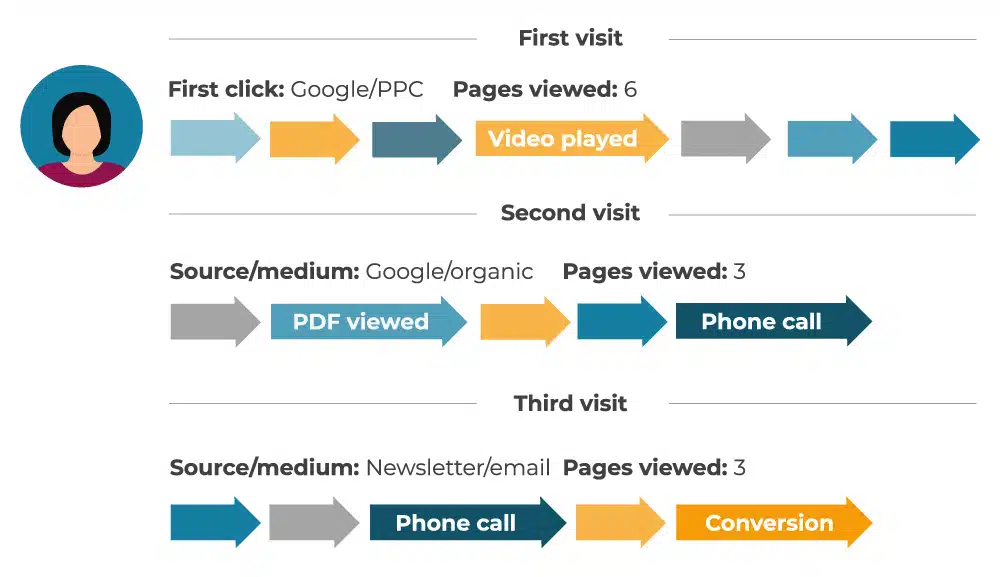
The quickest win? Dynamic website tracking numbers. This is where Mediahawk assigns unique phone numbers to visitors based on how they arrived at your site – whether through PPC, organic search, social media, or direct traffic, email, or other online source.
“What’s powerful about dynamic tracking is the granularity,” says Faye Thomassen, Head of Marketing at Mediahawk. “You’re not just seeing that someone called. You’re seeing they clicked on your Google Ad for used BMW 3 Series, browsed three vehicle pages, then called. That level of detail changes how you allocate budget.”
How to implement it quickly:
- Add a simple tracking script to your website (similar to Google Analytics)
- The code automatically changes your phone number based on the visitor’s source
- Start seeing data within hours of your first call
AvailableCar used this approach to understand their full customer journey. “With Mediahawk it’s interesting to see that people go from Google PPC to Google organic, back to PPC, make a phone call, then go back again to organic,” says Pamela. “We’ve never had that insight before, and you can’t get that from Google Analytics.”
Step 2: Add static numbers to your off-website marketing channels
While dynamic tracking handles your website, static tracked numbers work brilliantly for specific campaigns and listings. Think of these as your dedicated campaign phone lines.
Place unique tracked numbers on:
- Individual Auto Trader listings (track performance by vehicle type or location)
- Facebook and Instagram pages
- Google Business Profile for each dealership location
- Print ads in local publications
- Email campaigns to your existing database
“For automotive dealers, being able to segment data based on types of vehicles, compare performance across different locations, and accurately track call conversions from Google Business Profile is invaluable. You start to see patterns. Maybe paid social performs better for enquiries for SUVs, while your organic sources drive more enquiries for electric vehicles.”
– Faye Thomassen, Head of Marketing, Mediahawk
Step 3: Connect the dots with Sales Matching
Here’s where it gets interesting. Most analytics platforms can’t even tell you that someone called. They only report on online conversions like form fills. And even if you know a call happened, standard analytics can’t tell you if that call turned into a sale. Sales Matching bridges this gap by linking phone enquiries directly to revenue.
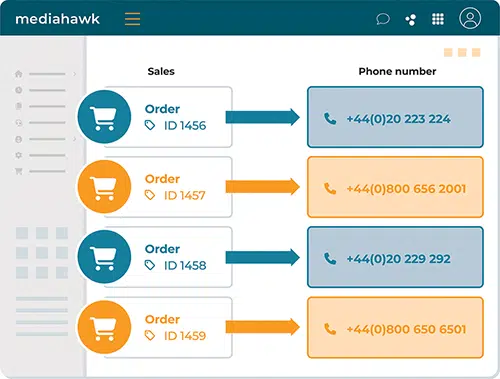 AvailableCar uses Sales Matching to identify which channels don’t just generate calls, but actually deliver sales. They’ve added specific data like vehicle make and model, so they can see exactly which marketing channels work best for different stock types.
“We can now look at vehicle sales by channel, and understand the influencing interactions in those buying journeys,” Pamela explains. This insight feeds back into purchasing decisions and overall strategy. If you know certain channels consistently sell premium vehicles while others work better for budget-friendly stock, you can tailor your marketing accordingly.
Quick implementation tip:
You don’t need a complex integration to start. Export your sales data monthly and Mediahawk can match it to call records. As you scale, you can automate the process with direct integrations – including Dealerweb, the platform many automotive dealers use for their inventory management and CRM. The Dealerweb integration automatically syncs your call data with sales records, eliminating manual data exports and giving you real-time visibility into which calls convert to deals.
Step 4: Use Speech Analytics to understand what’s actually being said
This is where call tracking evolves from ‘who called and why’ to ‘what happened during that call, and what can we improve’.
 Prospecting Dynamics, who provide enquiry management services to car dealers, have used Mediahawk’s AI-powered Speech Analytics to review over 800,000 sales calls. The results reveal some uncomfortable truths: 34% of customers’ calls weren’t making it onto dealer management systems, and poor first-contact experiences were costing dealers significant sales opportunities.
“Automotive manufacturers are constantly doing market research, but they tend to be sample-size surveys of around 2,000 customers,” says Nancy from Prospecting Dynamics. “In comparison, with Mediahawk, we’ve analysed over 800,000 calls. The insights we get from that scale really can’t be argued with because the dataset is so huge.”
Speech Analytics automatically flags:
- Missed opportunities to book test drives or appointments
- Calls where customer details weren’t captured
- Common objections or questions
- Conversations that went nowhere versus those that progressed the sale
What this means for you:
AvailableCar discovered that calls they thought were sales enquiries were actually after-sales queries. “Speech Analytics has shown us really interesting data on the intent of our calls,” says Pamela. “Now we can look more closely at how we can use that data to drive more sales calls.”
“Speech Analytics takes the guesswork out of call quality. Instead of manually reviewing random calls, the AI surfaces the conversations that matter – the ones where you’re losing deals, or where your team is excelling. That focus accelerates improvement.”
– Lawrence Cavill Grant, Head of Commercial, Mediahawk
Step 5: Act on the data (faster than you think)
One of the biggest frustrations with traditional analytics is the waiting game. You run a campaign, wait weeks to gather enough data, then analyse it retrospectively when the moment’s passed.
 Mediahawk flips this model. You see results immediately: Which ads are driving calls, which calls are turning into sales, and where the gaps are.
“Mediahawk enables us to understand when and where our Google Ads performance is dropping off, so we can do something about it quickly,” says Pamela from AvailableCar. “The dashboards and reports allow us to easily monitor performance on a daily and weekly basis, so we know if it’s down, what is down, and why it’s down. Then we can take remedial action straight away to improve it.”
Quick wins you can implement immediately:
- Pause underperforming campaigns: If a PPC campaign generates clicks but no calls, you’ll know within days.
- Reallocate budget to winners: Double down on channels that consistently drive high-quality enquiries.
- Adjust your messaging: If Speech Analytics shows customers repeatedly asking the same question, address it in your ad copy and on your landing pages.
- Improve response times: Track when calls go unanswered and adjust staffing levels accordingly
The real-world impact: What dealers are achieving
When Prospecting Dynamics combined their enquiry management expertise with Mediahawk’s data, the results for their dealer clients were dramatic:
- Poor first-contact experiences dropped by 65%
- Unanswered calls fell by 35%
- Calls logged in dealer management systems increased by 40%
- High-quality sales calls rose by 32%
- Conversations that went nowhere shrank by 72%
For AvailableCar, the ability to track trends over time transformed their approach. “We now have data for the last year, so we can look at trends and know what’s coming up,” Pamela explains. “If we know that calls dipped at a certain time last year, we can anticipate the same happening this year and proactively tackle how we can bolster it to improve performance.”
Your quick-start guide
- Set up dynamic tracking: Set up dynamic number insertion on your website. Start seeing which marketing sources phone calls from visits.
- Deploy static numbers: Roll out unique tracked numbers to your key listings and campaigns (for example Auto Trader and Google Business Profile). Track performance by vehicle type or location.
- Review your initial data: Identify your top-performing channels and any immediate red flags (like campaigns generating clicks but zero calls).
- Enable Sales Matching: Connect call data to revenue outcomes so you can see which channels don’t just drive enquiries, but actually convert to sales.
- Layer in Speech Analytics: Start understanding what’s being said during calls and identify opportunities to improve conversion rates.
“The beauty of starting small is that you see value immediately,” says Faye. “You don’t need to implement every feature at once. Get the basics working, prove the ROI to yourself, then expand from there.”
Why this approach works
Traditional marketing analytics tell you what happened before the call. Call tracking shows you what happens during and after the call – the conversations that actually matter for your bottom line.
“Technology gives us the data, and human expertise translates that into practical action,” Nancy from Prospecting Dynamics explains. “That combination – robust data from Mediahawk paired with understanding what to do with it – is what drives results.”
For automotive marketers dealing with longer sales cycles, higher-value transactions, and customers who need multiple touchpoints before purchasing, visibility into the phone channel isn’t optional anymore. It’s how you compete.
Summary
The used car market is growing more competitive, margins are tightening, and every enquiry matters. The dealers who win are the ones who understand their customer journey, optimise the moments that matter, and can prove what’s working.
Book a demo of Mediahawk and we’ll show you exactly how your phone channel performs right now – no lengthy implementation needed. You can start capturing insights from day one and see which of your marketing efforts are genuinely driving enquiries versus just driving traffic.

Book a demo and we’ll show you which marketing efforts are driving enquiries, and which ones are wasting your budget.