AM Live 2025: Key takeaways from the day

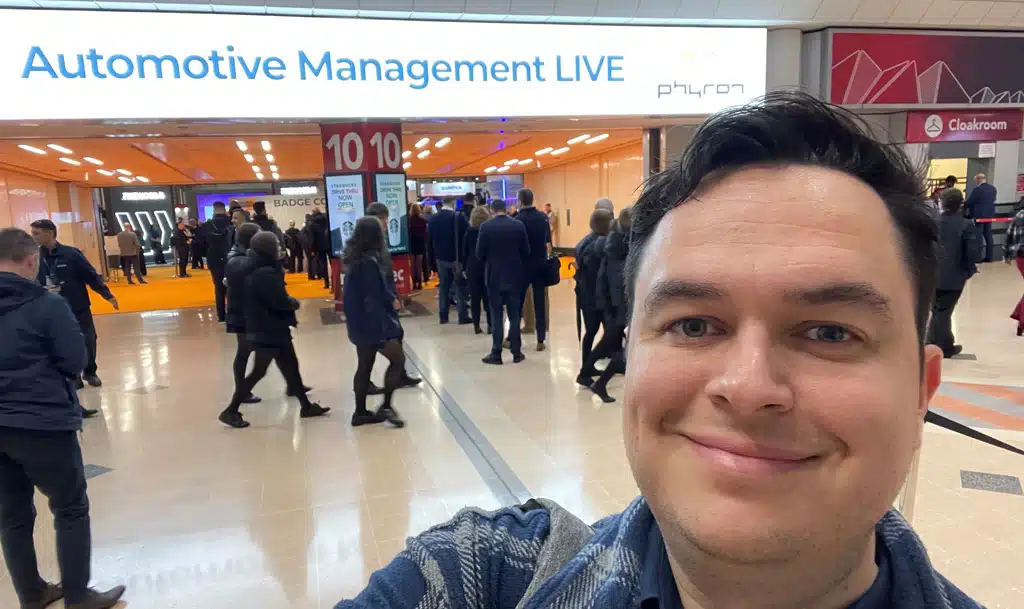
You could sum-up the general mood at Automotive Management Live 2025 in one word: Uncertainty, a state of not being able to be relied on; not known or definite.
I believe we’re all agreed that feeling won’t be going away until at least 26 November 2025, but will more than likely persist well beyond the upcoming Autumn Budget.
The two biggest topics covered were:
- The emergence of AI
I think we all said the same jokes last year about how everyone is sick of hearing about AI, but it’s here to stay and we’ll likely say the same again next year. - ZEV and ECG
We had some truly great speakers that I felt were almost paralysed into saying little about the market. Frustrating, but more than understandable given the rumour-mill is in full swing about what the Autumn Budget will bring.
AI: Where dealers are heading
Dealers are starting to iron out the use cases for large language models (LLMs) and AI in general (although discussions primarily centred around the use of LLMs). The conclusion is clear: AI is here to stay but it’s ‘in aid of’ the human – not ‘instead of’.
- Understanding how to capitalise on AI effectively – expanding teams’ capabilities rather than using it to replace team members – is increasingly going to become a defining factor in elevating the overall customer buying experience.
- The focus for dealers was on how AI can automate leads and prospects in ways that their teams currently overlook. Examples include using AI to engage customers in conversations and to keep them going in a way that would be infeasible to ask of staff. For example: AI won’t clock out at the end of the day, and won’t complain if you want to send a round of emails to prospects at 3am or on a bank holiday.
As an emerging technology, it’s difficult to offer definitive guidance to a broad audience on how to implement AI. However, one thing is increasingly clear: successful AI adoption will require as much diligence in defining the right job for AI to tackle as it will in selecting the right AI tool for the job.
ZEV and ECG: Shifting buying habits
Zero emission vehicles (ZEV) and electric car grants (ECG) form another fast-moving area of the market, but one I suspect attendees felt more familiar with.
- Despite the difficulties around navigating the upcoming Autumn Budget there was a good deal of discussion and – even better – data on the subject. The market is evolving and buyer expectations and reservations are beginning to shift. We’re starting to see the EV buying cycle shift from 1-3-year-old EVs to 3-10-year-old models.
- Battery health in a second hand car being at or above 90% overall is a significant driving factor behind used car enquiries. That’s important when approximately 50% of consumers plan to sell their car to contribute towards their next car purchase, and one in four new buyers plan on owning an EV as their next car (diesel now ranking lowest at under 10%).
- A core concern right now is how this shift to EV’s will impact aftersales – smaller dealers can’t even reliably offer services to these cars as they lack the qualified engineers on-site. It’s easy to see how those that invest now in the engineers and facilities to offer these services are going to benefit significantly from these changes, while those unable or unwilling to invest in this area are going to find themselves in a position of leaning on windscreen wiper and air freshener sales to try to bridge the gap left from servicing.
- Sentiment among car dealers was tepid on the EV schemes. Many highlighted the positive performance of the ECG (once we all finally knew the details) but the interest in these vehicles wasn’t sustained, and enquiry traffic has since fallen off in the weeks after the announcement. Any positives more often than not came in the form of support provided by the EV brands themselves who, in some cases, pledged financial support with their own ‘discounts’. The ECG, once finalised, felt like too little too late from the Government – who certainly did not receive much in the way of positive sentiment given the looming Budget.
The used EV market: The next unknown
Speaking of murky waters… The other major unknown factor is how this shift to EV’s will impact the used market. While we’re seeing improvements in customers willingness to look at used EVs, the difficulty lies in predicting the impact EVs will actually have. Instead of the natural used car market which was able to develop over time, we’re seeing a more-or-less artificial market created via these incentives and on the evolving technology being a much more relevant factor.
With an in-depth understanding of the automotive industry, Mediahawk can help you turn uncertainty into insight. Book a demo today to see how our call tracking and attribution tools drive meaningful enquiries, optimise spend, and improve your customer journey.