What the UK’s biggest Toyota dealer group can teach marketers about loyalty in the EV era
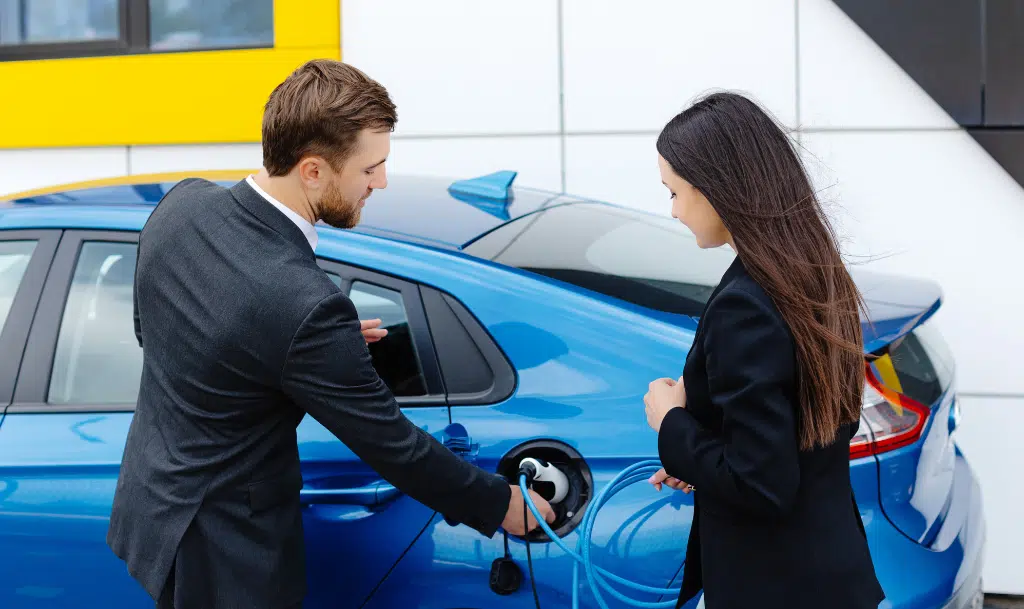
Electric vehicles are reshaping the car-buying journey. Buyers compare more brands. Ask more questions. Take longer to decide. For manufacturers and retailers alike, that means one thing: they can’t take decades of petrol and hybrid loyalty for granted.
In a recent AutoTrader interview, Steven Eagell spoke about this shift. He’s the founder and chief executive of the Steven Eagell Group, Toyota’s largest dealer group in Europe. He explained how a retention-focused business is adapting its strategy for an electric future.
A business built on retention
The Steven Eagell Group launched with a single site in 2001. It has since grown to 43 Toyota and Lexus dealerships across the UK. That scale hasn’t come from chasing every brand going. Eagell made a deliberate choice early on: go deep with one manufacturer, rather than spread thin across several.
“I don’t want to end up doing half a job three or four times,” he said. Sticking with Toyota and Lexus meant the group could copy successful processes across every site and build a genuinely close relationship with its manufacturer partner, rather than juggling the demands of several.
That focus shows in the numbers. The group has 65,000 live Personal Contract Purchase (PCP) cases and retention above 50%, built on what Eagell calls “the basics”: consistent customer contact, service plans that keep vehicles coming back, and a sales team empowered to use its own judgement rather than follow a script.
Why electric vehicles are a different kind of challenge
Loyalty rates typically fall as buyers switch to electric vehicles. There are more brands to compare, more unfamiliar technology to weigh up, and, for many drivers, genuine uncertainty about range and charging. Eagell saw this first-hand on a trip to Norway four years ago, when the country’s electric vehicle market share had already reached the high eighties as a percentage of new car sales.
“That’s the one thing we picked up there: brand loyalty dropped down significantly,” he said.
It’s a warning for any manufacturer relying on habit to keep customers coming back. When the product changes as fundamentally as it does with electrification, the relationship has to work harder to hold.
Toyota’s approach has been to lead with hybrid and plug-in hybrid technology rather than rush to full electric. Eagell points to the original Prius as an early example of that philosophy in action: rather than being first to market with electrification, Toyota focused on getting it right. Plug-in hybrids, in particular, offer a practical middle ground for drivers who want lower running costs without the anxiety of relying entirely on charging infrastructure.
For marketers, that’s a useful reminder. New technology doesn’t remove the need to understand what your audience actually wants. It just changes the questions they’re asking before they buy.
New entrants, and why chasing every trend isn’t the answer
New brands are moving into the UK market quickly, often with competitive pricing and electric-first ranges. Eagell is clear-eyed about the threat, but equally clear that stretching the business to compete on every front isn’t the right response.
On the question of partnering with new entrants, Eagell said: “Never say never.” But rather than diluting its focus, the group is squeezing more value from its existing customer base and processes.
One example: the group’s new lost sales analysis. The group sells around 50,000 vehicles a year, against a one-in-five closing ratio. That means it speaks to roughly 250,000 customers annually, and around 200,000 of them don’t buy. Improving that conversion rate by just one percent would add 2,000 additional sales. And it wouldn’t cost a penny more in lead acquisition.
It’s a sharp illustration of a message we come back to often: growth doesn’t always mean reaching more people. Sometimes it means understanding, in detail, why the people you’ve already reached didn’t convert, and fixing the gaps in between.
People, culture, and the long game
The group has built its retention on a culture of longevity. Many of its senior and divisional directors have been with the business for ten to twenty years. Most started on the shop floor. Eagell attends induction days personally. He also makes a point of recognising employees whose contribution doesn’t show up on a leaderboard. That includes hosts and administrators who shape every customer’s first impression.
His advice for anyone starting their own business is simple: build the right team, don’t feel threatened by people who are better than you, and think in years rather than quarters. “If I don’t get short-term results, fine, as long as it’s right for the business long term,” he said.
That patience extends to the OEM relationship too. Eagell credits Toyota’s decision to avoid an agency model, and instead support dealers with cash flow assistance and a collaborative dealer council, as a key reason the partnership has lasted more than twenty-five years. Both sides, he argues, listen to each other and work towards the same goal: happy customers who keep coming back.
What this means for marketing attribution
For automotive marketers, the lesson from the Steven Eagell Group is that loyalty in the electric vehicle era won’t be won through brand strength alone. It has to be earned through visibility into every stage of a longer, more comparison-driven customer journey.
That means knowing which channels bring in genuine buyers, rather than browsers. It means understanding where high-intent conversations stall. And it means giving teams the confidence to act on real data, rather than guesswork. Mediahawk built its marketing attribution and call tracking platform for exactly that challenge. It helps automotive groups track demand across makes, models, and dealership locations. It connects every call and click back to its source. And it helps teams find the hidden opportunities sitting inside their own sales process.
As Eagell put it, the biggest gains often come from getting a little better at the basics, not from chasing every new trend. That’s a message marketers navigating the shift to electric vehicles would do well to remember.
Want to see how Mediahawk can help your dealership group track demand and improve conversion across every channel? Book a demo to find out more.

Book a customised Mediahawk demo now to see how you can get full-funnel visibility of customer journeys, achieve 100% marketing attribution, and make smarter spending decisions.