The ultimate guide to digital marketing analytics in 2025


- Key points
- What is digital marketing analytics?
- How is analytics used in digital marketing?
- Why is digital marketing analytics important?
- Call tracking features to improve your digital marketing analytics
- AI in marketing analytics
- Privacy-first analytics
- Integration with modern martech stacks
- Why choose Mediahawk for digital marketing analytics?
Digital marketing analytics. It’s a subject that’s loaded with jargon and tech-speak. So, what do we really mean by digital marketing analytics? In this blog, we’ll answer some of the common questions, giving you an insight into what digital analytics is all about and why it’s useful for you.
Key points
- Digital marketing analytics translates customer behaviour into actionable insights that improve marketing strategy and drive measurable revenue impact
- 14 essential metrics include website traffic, conversion rates, cost per click, and ROI – but avoid vanity metrics like page views and social likes
- Data-driven decisions outperform gut feelings – analytics help predict audience behaviour, optimise budgets, and eliminate wasted spend
- AI-powered analytics enable predictive customer behaviour analysis, real-time optimisation, and automated insights that save time
- Revenue-focused planning starts with sales outcomes and builds attribution into campaigns from the beginning
- Call tracking bridges online and offline worlds – phone conversations often convert at higher rates than digital forms
- Privacy-first analytics rely on first-party data and phone call attribution as third-party cookies decline
- Mediahawk’s Speech Analytics automatically transcribes calls and identifies customer intent, keywords, and conversion opportunities
- Complete attribution across all touchpoints solves the challenge 70% of marketers face in measuring campaign effectiveness
What is digital marketing analytics?
Digital marketing analytics involves gathering insights into customer behaviour and translating them into actions that can improve your marketing strategy. Analytics tools like Mediahawk help your company understand how your customers are behaving online and what drives them to act in certain ways. This is valuable data for any company, but building a data-driven organisation starts with establishing clear accountability at every level. When teams understand how their actions directly impact business outcomes, marketing data and can be harnessed to create marketing campaigns that convert.
14 common digital marketing metrics
Depending on the digital marketing channels you use, there are many metrics to consider when measuring the performance of your efforts.
We’ve listed 14 of the most common ones here, with some jargon-busting explanations for each:
- Website traffic: Your overall traffic across your website.
- Traffic by source: This shows whether your traffic is coming organically, from referrals, socials and so on.
- Sessions: The number of visits your site receives.
- Session duration: The average length of each session.
- Page views: The total quantity of pages viewed.
- Exit rate: Where a user left your site after spending some time viewing.
- Bounce rate: Where a user leaves your site after viewing a single page.
- Conversion rate: The percentage of ‘conversions’ made; this may be a sale, a subscriber, a completed form – it depends on your industry.
- Impressions: The overall quantity of views or engagements a page or advert has.
- Click-through-rate: The percentage of viewers who click on a link.
- Cost per click: A reflection of the amount you pay for each individual click.
- Cost per conversion: How much it costs to convert an individual visitor into a conversion.
- Cost per acquisition: Refers to the lifetime value of a customer (only relevant for companies with returning customers).
- Overall ROI: How much you spent versus how much you made in return.
Did you know? You can easily integrate Mediahawk with Data Studio to benefit from these insights and much more.
How is analytics used in digital marketing?
Digital marketing analytics is one of the most useful tools when it comes to planning and monitoring your marketing campaigns. Analytic platforms and software can play a vital role in understanding the complete user journey, helping you decipher exactly who is buying your products or services and how they make their purchase decisions.
Why is digital marketing analytics important?
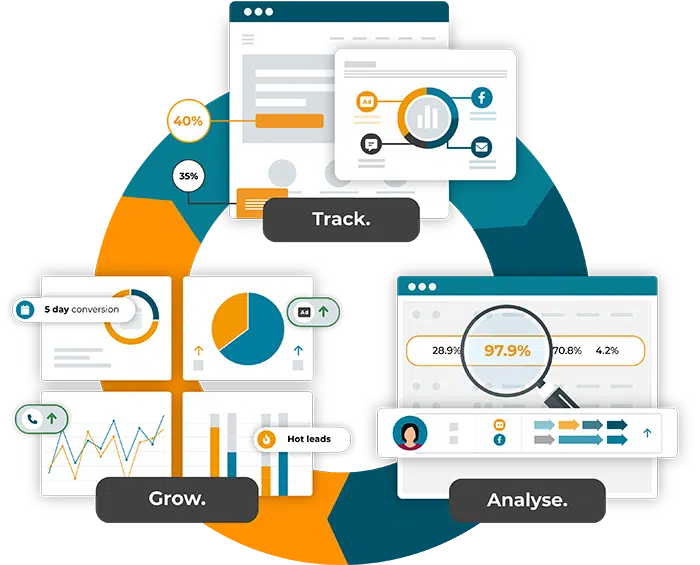 When you understand the buyer journey and your audience demographics, it becomes clearer which decisions you need to make to create the most impact and how to keep those customers engaged. Digital marketing analytics help you to understand your progress and go back to see which campaigns worked more effectively than others.
Better understand customers
Analytics tools help you understand how your target audience acts. With insights into their behaviour and demographics, you’ll have a far more accurate idea of their personalities and interests. These insights are priceless, as they allow you to predict how your audience will act in the future and plan your marketing strategy accordingly.
Make decisions based on data rather than feelings
Predictions based on data are more grounded in reality than ‘finger-in-the-air’ style decision making. If you know how your market is likely to react, or how they respond to different marketing techniques, you’ll be able to adapt your digital marketing campaigns so they produce the best results.
Optimise your approach
Similarly, analytics tools will tell you which of your campaigns are most successful. By identifying your successful and less successful approaches, you’ll be able to adjust your budget and strategy to prioritise methods that get results.
Accountability that drives results
Every campaign, channel, and conversion point need a clear owner. This isn’t about blame when things go wrong – it’s about empowering teams to make informed decisions and celebrate successes backed by solid data.
Make data accessible
The most sophisticated analytics platform means nothing if your team can’t easily access insights. Choose solutions that provide clear, actionable data across all levels of your organisation, from junior marketers to C-suite executives.
Connect individual actions to business outcomes
Help every team member understand how their work contributes to revenue. A content creator should see how their blog posts drive phone call conversations. A PPC specialist should understand which keywords generate actual sales, not just clicks.
Building trust through transparency
With Mediahawk, you can create transparency that builds confidence. When teams see complete attribution – including the phone call conversations that close deals – they gain trust in the data and confidence in their decision-making.
Save money and boost ROI
A huge amount of time and money can be spent on campaigns or advertising; they can quickly drain your budget, and may not have the success rate you’d hoped for. This is arguably the best reason to integrate digital marketing analytics for your business. By removing unknown outcomes, your focus can be solely on the things that actually work for you.
Planning programmes with ROI in mind
 Every marketing programme should begin with the end in mind: measurable revenue impact. This approach transforms how marketing activities are planned, executed, and evaluated.
Revenue-focused planning
- Start with sales outcomes: Before launching any campaign, define what success looks like in terms of actual revenue. How many sales do you need? What’s the average deal value? How many phone calls typically convert to sales? Then, you can calculate backwards from revenue targets.
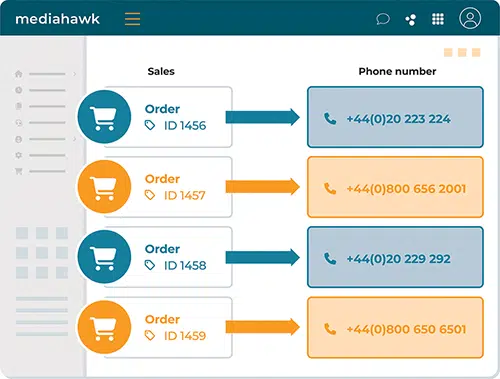
- Build attribution into the planning process: Plan how you’ll track success before you launch. With call tracking and marketing attribution, you can connect every touchpoint in the customer journey to actual sales outcomes.
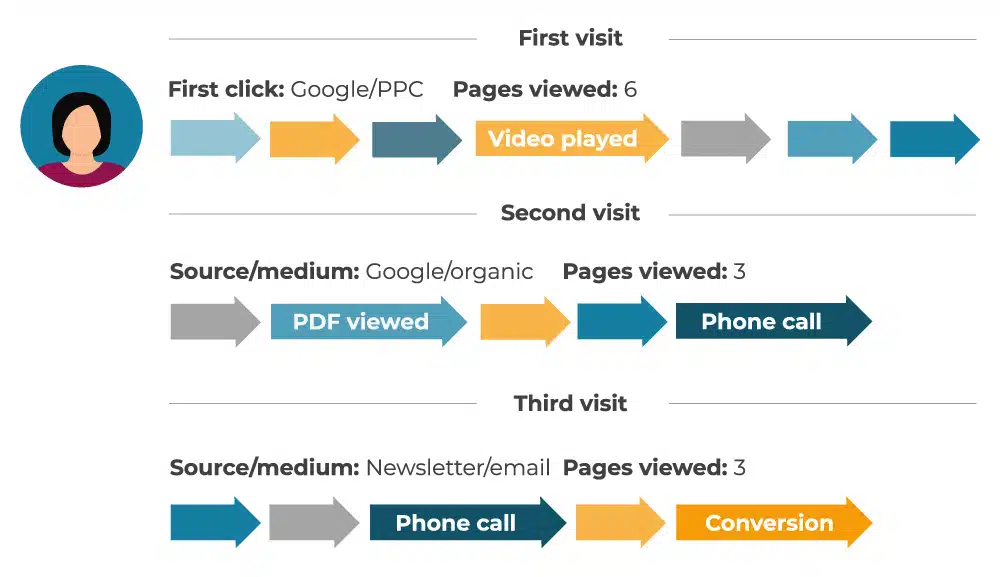
- Account for the complete customer journey: Modern buyers don’t convert on first contact. Plan for multiple touchpoints and ensure you can track the whole journey from first awareness to final purchase.
Practical ROI calculation framework
When calculating ROI, you’ll need to factor in more than just the mathematical formula:
- Customer lifetime value, not just initial purchase
- The cost of nurturing leads through phone call conversations
- Attribution across multiple channels and touchpoints
- The impact of brand awareness on future conversions
Creating a framework for measurement
A robust measurement framework provides the foundation for all marketing decisions.
Step 1: Define your conversion hierarchy
Not all conversions are equal. Create a hierarchy that reflects actual business value:
- Primary conversions: Sales, qualified leads, high-intent phone calls
- Secondary conversions: Newsletter signups, content downloads, quote requests
- Engagement metrics: Website visits, social engagement, email opens
Step 2: Establish attribution models
Choose attribution models that reflect your customer journey:
- First-touch attribution for awareness campaigns
- Last-touch attribution for conversion campaigns
- Multi-touch attribution for complex B2B sales cycles
- Time-decay attribution for longer consideration periods
Step 3: Implement cross-channel tracking
Ensure you can track customers across:
- Online channels (website, social media, email)
- Offline channels (phone calls, in-store visits)
- Multiple devices (desktop, mobile, tablet)
- Different touchpoints throughout the buyer journey
Step 4: Create feedback loops
Build systems that allow insights to inform future decisions:
- Weekly performance reviews
- Monthly strategy adjustments
- Quarterly framework evaluations
- Annual measurement framework audits
Key components to your measurement framework
Data integration
All your marketing data should flow into a centralised system where you can analyse cross-channel performance and attribution.
Real-time reporting
Access to live data allows for immediate optimisation and prevents wasted spend on underperforming campaigns.
Automated alerts
Set up notifications for significant changes in performance, conversion rates, or cost metrics.
Stakeholder dashboards
Different roles need different views of the data. Create tailored dashboards for marketers, sales teams, and executives.
Embracing revenue analytics
Revenue analytics transforms marketing from a cost centre into a profit driver by directly connecting marketing activities to financial outcomes.
Beyond lead generation
While generating leads matters, what really counts is generating leads that convert to revenue. Focus on the quality of phone call conversations, not just quantity.
Customer lifetime value focus
One customer might be worth £500 initially, but £5,000 over their lifetime. Revenue analytics help you optimise for long-term value, not just immediate conversions.
Channel revenue attribution
Understand which marketing channels drive the highest-value customers. Your most expensive channel might deliver your most profitable customers.
Implementing revenue tracking
Sales cycle mapping: Map your typical sales process from first contact to closed deal. Identify where marketing influences the process and where sales take over.
Revenue attribution models: Connect marketing touchpoints to actual revenue:
- Direct attribution: Phone calls or form submissions that directly lead to sales
- Assisted attribution: Marketing touchpoints that influence but don’t directly convert
- View-through attribution: Prospects who saw your ads but converted through other channels
Predictive revenue modelling: Use historical data to predict future revenue based on current marketing performance.
Market factor integration: Consider external factors that impact your forecasting, such as seasonal business cycles, economic conditions affecting your target market, competitive landscape changes and industry trends and disruptions.
Revenue analytics in action
Track metrics that directly connect to revenue:
- Revenue per phone call by channel
- Customer acquisition cost by source
- Customer lifetime value by acquisition channel
- Sales cycle length by marketing touchpoint
- Conversion rates from marketing qualified leads to revenue
Accurate forecasting enables proactive decision-making and budget allocation.
Practical forecasting techniques
Trend analysis: Look at 12-month rolling averages to identify growth and seasonal trends.
Cohort forecasting: Analyse customer behaviour by acquisition cohort to predict future value and churn rates.
Create multiple forecasts:
- Conservative scenario (worst-case performance)
- Realistic scenario (expected performance based on trends)
- Optimistic scenario (best-case performance with favourable conditions)
Pipeline forecasting: For businesses with longer sales cycles, forecast based on your current pipeline:
- Leads in the awareness stage
- Prospects having active phone call conversations
- Opportunities in negotiation
- Deals pending closure
Tools and technologies for forecasting
Predictive analytics platforms
Solutions that use machine learning to identify patterns and predict outcomes based on your historical data.
Statistical modelling
Use regression analysis and time series forecasting to predict future performance based on multiple variables.
Call tracking insights
Analyse phone call conversation patterns to predict conversion likelihood and optimal follow-up timing.
Building dashboards to inform decisions
Effective dashboards transform raw data into actionable insights, enabling faster and more informed decision-making across your organisation.
 Dashboard design principles

Different stakeholders need different information, create audience specific views to prioritise and share data effectively:
- Executive dashboards: High-level KPIs, revenue impact, ROI summaries
- Marketing manager dashboards: Campaign performance, channel attribution, conversion funnels
- Specialist dashboards: Detailed metrics for PPC, content, social media, or email marketing
Present the most critical information prominently:
- Key performance indicators at the top
- Supporting metrics in secondary positions
- Detailed breakdowns available through drill-down functionality
Some metrics need real-time monitoring (PPC spend, website traffic), while others are better reviewed weekly or monthly (customer lifetime value, brand awareness).
Dashboard implementation best practices
- Start simple: Begin with core KPIs and add complexity as users become comfortable with the data.
- Ensure data accuracy: Dashboards are only valuable if the underlying data is reliable and up-to-date.
- Enable action: Every metric on your dashboard should connect to a potential action.
- Regular review and optimisation: User needs evolve, as should your dashboards. Regular feedback sessions ensure they remain relevant and valuable.
Implementation across teams
Successful analytics implementation requires coordination across your entire organisation, from marketing and sales to customer service and IT.
Technology integration
CRM integration
Connect your marketing analytics with customer relationship management systems to create a complete view of the customer journey from first contact to ongoing relationship management.
Marketing automation platforms
Integrate analytics data to trigger personalised communications based on customer behaviour and engagement patterns.
Call tracking integration
Ensure phone call data flows seamlessly into your analytics platforms, providing complete attribution and customer journey insights.
Data warehouse solutions
Centralise all marketing data in a single location where it can be analysed holistically and accessed by different teams as needed.
Call tracking features to improve your digital marketing analytics
Mediahawk has a variety of features that will give you priceless customer insights. Let’s take a look at a few.
Call tracking
Get a more in-depth understanding of what drives your customers with our call tracking tool. Mediahawk helps you join up the online and offline worlds, where other analytics tools keep them siloed and separate. With Mediahawk, you can give your digital marketing analysis an extra dimension and paint a more comprehensive image of your customer journey.
Speech Analytics
Speech Analytics is a popular tool among marketers.
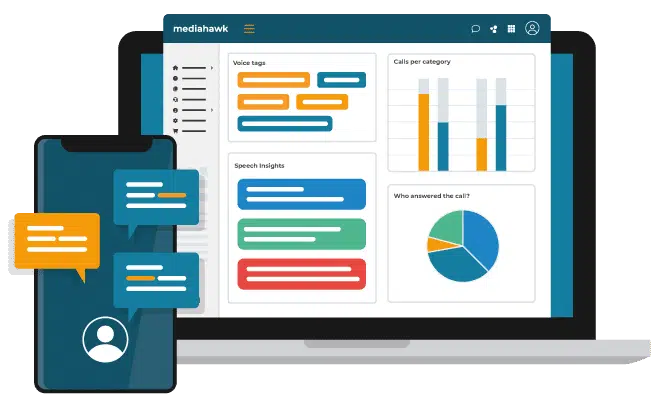
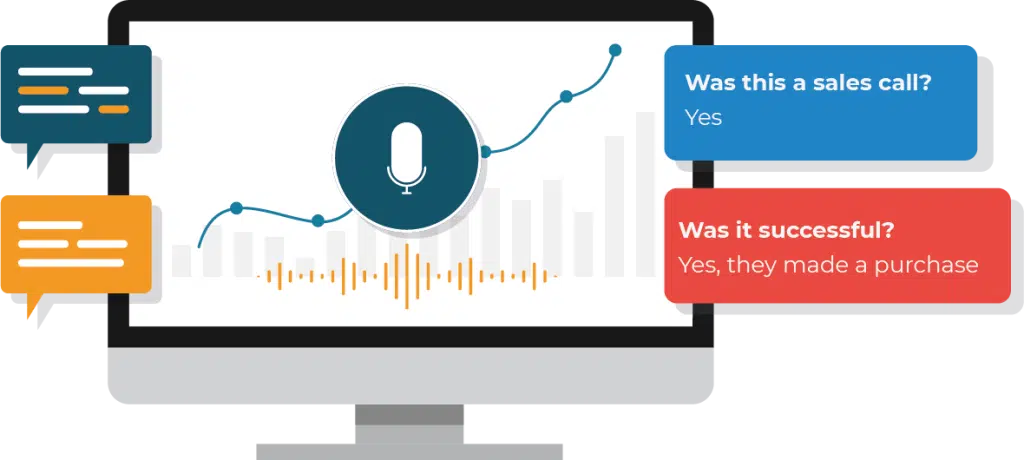 Using Speech Analytics, keywords and phrases that are spoken in conversation are automatically identified, helping you to quickly recognise customer intent. This tool is fantastic for spotting trends in the behaviours of your customers and enables you to curate your call lists to only those who are likely to provide an ROI.
The words ‘would want to buy’, ‘considering purchasing’, or ‘how much will it cost?’ may be used by a caller. These keywords are recognised by Mediahawk, which categorises these calls as ‘sales’ and separates them from ‘billing/accounts’ and ‘support/service’ inquiries.
Multi-channel tagging
With Mediahawk, evaluating the effectiveness of multichannel marketing efforts is simple. Simply add a custom tag to your campaign URLs, similar to how you would with Google’s URL Builder tool. For each lead, Mediahawk will gather useful information such as device kind, campaign, content, and creativity.
You can segment your data in increasingly more effective ways with multichannel campaign tagging. Use segmentation to keep track of your most effective channels and gain a deeper understanding of your customers’ habits.
Sales reporting
Make dynamic reports that show sales, conversions and more so that you can assess campaigns. Get insights into what was sold and why, see which sources led to sales, view the complete customer journey and more. Our sales reporting tool helps your sales and marketing teams make informed decisions, improving the likelihood of successful campaigns.
Secure call handling
You may only have one shot to make a deal, so knowing how to organise your calls is critical. Customers are influenced by your tone of voice, product knowledge, and problem-solving abilities.
Furthermore, the simpler a customer’s path is, the more likely they are to make a purchase. Our secure call handling software can help you fine-tune these and other parameters so that each call can result in a conversion. See ten tips to improve call handling.
Marketing attribution
You can pinpoint which marketing activity gets you the most leads using our advanced call analytics tools, marketing attribution, and reporting. It means you’ll never miss a lead again. Map every conversion across online and offline channels, giving you a true view of where leads come from. See at a glance which activities and sources deliver the best results, and link every sale to the source.
 PPC call tracking
 PPC call tracking
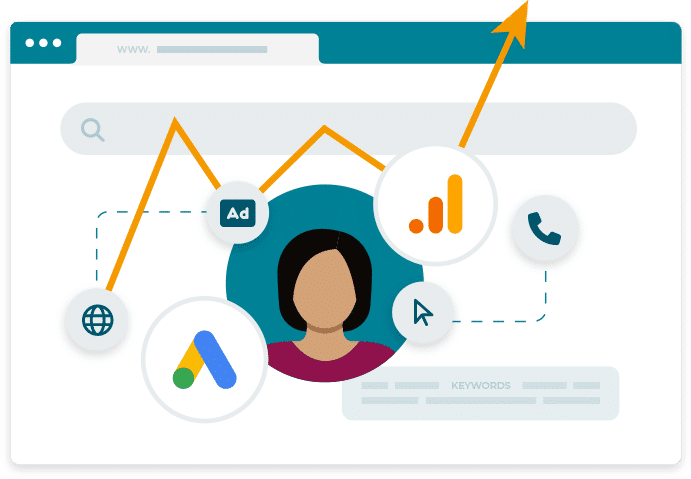
Mediahawk’s PPC call tracking allows you to observe conversions from both calls and clicks, providing you with a more realistic picture of your pay-per-click ads’ effectiveness. See 4 reasons you need PPC call tracking.
Call tracking integrations
It’s easy to integrate Mediahawk with other marketing tools. With our seamless interfaces, you can compare sponsored campaign responses from Google Ads, Microsoft Advertising, Facebook ads, and more in one report. Plus, you can even send call data from Mediahawk back to them. Learn more about how you can integrate Mediahawk with Facebook and Instagram Ads.
Outbound call tracking
Marketing and sales teams can use Mediahawk’s outbound call monitoring software to conduct telemarketing while simultaneously capturing data and insight to analyse the outcome of each conversation and high-level metrics.
With no additional software, you can get more insightful data than with VOIP or desk phones. Improve your outbound call value and demonstrate that they produce leads and revenue.
Call to action tracking
Mediahawk has call-to-action tracking which shows what entice your users to perform a certain action on your site, whether that be signing up to a newsletter, finishing the sales process or buying a product. Learn more about online and offline call-to-action tracking.
AI in marketing analytics
Artificial intelligence (AI) is revolutionising how marketers analyse data, predict outcomes, and optimise campaigns in real-time.
Predictive customer behaviour
AI analyses historical data to predict which prospects will most likely convert, enabling more targeted marketing efforts and better resource allocation.
Real-time optimisation
Machine learning algorithms automatically adjust campaign parameters based on performance data, optimising ad spend and targeting without manual intervention.
Conversation intelligence
AI-powered speech analytics automatically analyse phone call conversations to identify buying signals, objections, and conversion opportunities.
Practical AI applications for marketers
 Automated audience segmentation
 Automated audience segmentation
AI identifies customer segments based on behaviour patterns, enabling more personalised marketing approaches without manual data analysis.
Content optimisation
Machine learning algorithms analyse content performance across channels to recommend topics, formats, and distribution strategies that drive the highest engagement and conversions.
Predictive lead scoring
AI evaluates prospect behaviour across multiple touchpoints to predict conversion likelihood, helping sales teams prioritise their efforts.
Getting started with AI analytics
Start with clean data
AI is only as good as the data it analyses. Ensure your data collection and integration processes are robust and accurate.
Choose the right tools
Look for AI-powered features in existing platforms rather than completely new solutions. Many analytics platforms now include AI capabilities.
Focus on specific use cases
Begin with targeted AI applications like conversation analysis or predictive lead scoring before expanding to broader automation.
Maintain human oversight
AI provides insights and automation, but human expertise remains crucial for strategy and creative decision-making.
Privacy-first analytics
Data privacy regulations and the decline of third-party cookies are reshaping how marketers collect, analyse, and use customer data.
Adapting to privacy changes
First-party data strategies
Focus on collecting data directly from customers through owned channels like websites, email subscriptions, and phone call conversations.
Consent management
Implement clear consent mechanisms that build trust while enabling data collection for personalisation and analytics.
Privacy-compliant attribution
Server-side tracking
Move data collection from browser-based to server-side systems for better privacy compliance and data accuracy.
Aggregated insights
Focus on trend analysis and cohort-based insights rather than individual-level tracking for most marketing decisions.
Phone call attribution
As digital tracking becomes more limited, phone call conversations become increasingly valuable for understanding customer journeys and conversion paths.
Transparency in data use
Build trust by clearly communicating how customer data is collected, stored, and used to improve their experience.
Value exchange
Ensure customers receive clear value in exchange for their data through personalised experiences, exclusive content, or special offers.
Data minimisation
Collect only the data you actually need and use, demonstrating respect for customer privacy.
Attribution modelling evolution
Modern customer journeys are increasingly complex, requiring sophisticated attribution models beyond last-click attribution.
Advanced attribution approaches
 Multi-touch attribution
 Multi-touch attribution
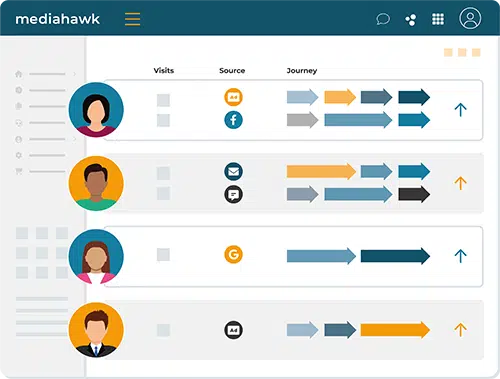
Track and value every customer touchpoint from initial awareness through final conversion, providing a complete picture of marketing impact.
Time-decay attribution
Give more credit to touchpoints closer to conversion while still recognising the value of early-stage awareness activities.
Data-driven attribution
Use machine learning to determine the optimal attribution model based on your specific customer behaviour patterns and business model.
Integration with modern martech stacks
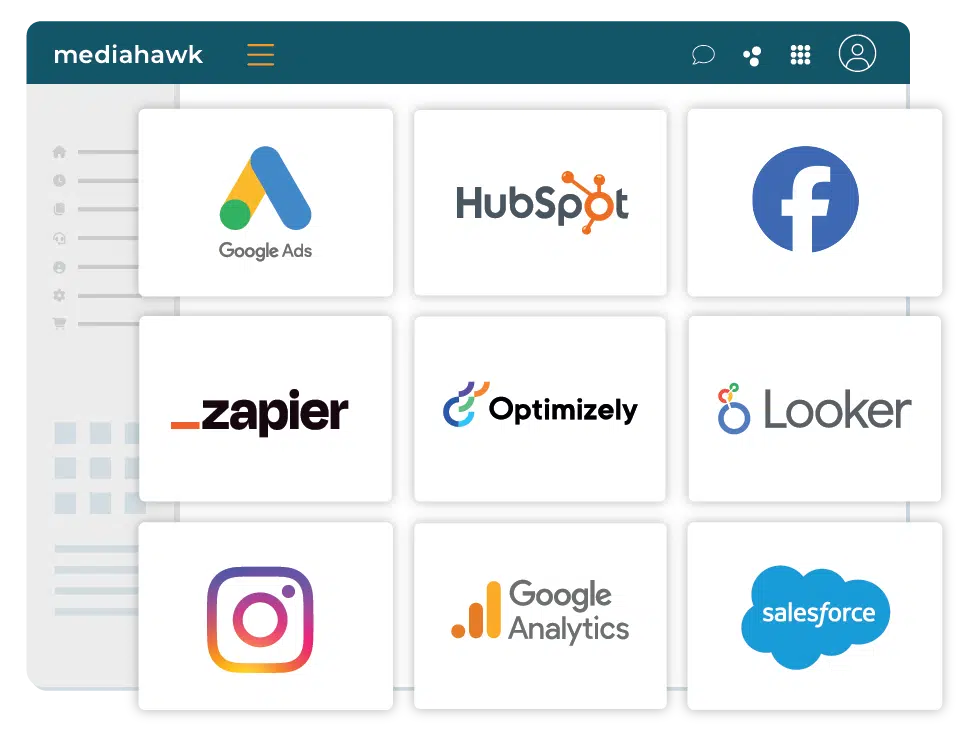 Today’s marketing technology requires seamless integration between multiple platforms to create a unified view of customer behaviour and campaign performance.
Customer Data Platforms (CDPs)
Centralise customer data from all touchpoints to create comprehensive customer profiles that inform personalisation and targeting strategies.
CRM systems
Connect marketing analytics with customer relationship management to track the complete customer lifecycle from first contact to ongoing relationship management.
Marketing automation platforms
Use analytics insights to trigger personalised communications and nurture sequences based on customer behaviour and engagement patterns.
Call tracking and conversation intelligence
Integrate phone call data with digital analytics to understand the complete customer journey and attribution across all channels.
Common digital marketing analytics questions
What are vanity metrics?
Often people get bogged down in what is known as vanity metrics. These are numbers that on the surface can look impressive, but in reality, are usually not very useful when it comes to planning ahead and looking at your strategies over the long term.
Typical vanity metrics can include page views to your website and likes on social media. Big numbers can look flashy, but they don’t tell you much about who is engaging with your content and whether their search or interests are being satisfied when they find your website or other marketing resources.
This is not to say that these metrics can’t be useful to you at the beginning of your digital marketing analytics journey. In fact, they can often provide a great foundation for learning the essentials of how your site is performing from a ‘zoomed out’ perspective. While you won’t learn much about your ROI, it can be useful to have this initial information to start considering how you’d like to improve these numbers.
As with anything, context is always key. Whether you want to use engagement or vanity metrics or dive much deeper, it’s important to explain what these numbers represent to you and your business – data without context can be easily skewed to fit a preferred narrative.
What industries should use digital marketing analytics?
Any industry that uses digital marketing would benefit from digital marketing analytics. We’ve had success working in a variety of sectors at Mediahawk, including:
- Automotive
- Care homes
- Dental
- Education
- Financial services
- Healthcare
- Legal services
- Marketing agencies
- Technology services
How is Mediahawk different to other digital marketing analytics tools like Google’s call conversions?
Mediahawk gives a more in-depth analysis of calls than Google’s call conversions. For example, with Mediahawk, you’ll be able to see:
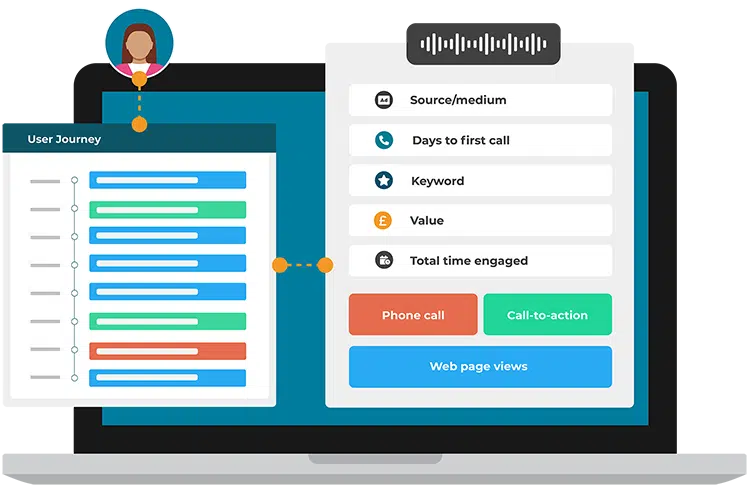
- Information on the customer journey, including their journey through your website, their IP address and the page they were on when they made the call to your company
- All their historical interactions, including previous website visits and calls
- The marketing sources that drives visitors to your site and phone calls
- The keywords used
- All interactions and conversions
You’ll also benefit from a range of other features that will lead to better analysis of the success of your campaigns, such as:
- The start and end times of calls
- Whether the call was answered or not
- The length of the call
- Recordings of calls
- The caller line identity (CLI)
- The area code of the caller
- More advanced call management and handling features
Why choose Mediahawk for digital marketing analytics?
There are several reasons companies all over the world choose Mediahawk for digital marketing analytics. Our product is impactful, reliably increasing the number of phone and website leads and helping companies create effective marketing strategies.
Mediahawk also helps reduce wasted spending on ineffective campaigns, prioritise campaigns that work and boost return on investment. Our friendly team are always ready to offer support, and our Client Excellence Programme is designed to help all clients get the most out of Mediahawk.
Learn more about why you should choose Mediahawk, read our case studies for real-life success stories and get in touch for more information.
This blog was originally published in February 2022. It was revised and updated in September 2025.
Article Update – 01/07/2026
Google has reintroduced the Data Studio name, replacing Looker Studio. We’ve updated this article to ensure naming and references remain accurate and up to date.

Book a 15-minute, no-obligation demo and we’ll show you how Mediahawk can help you build a stronger pipeline of leads and sales.